
Venus Opens Up About Indian Wells Return
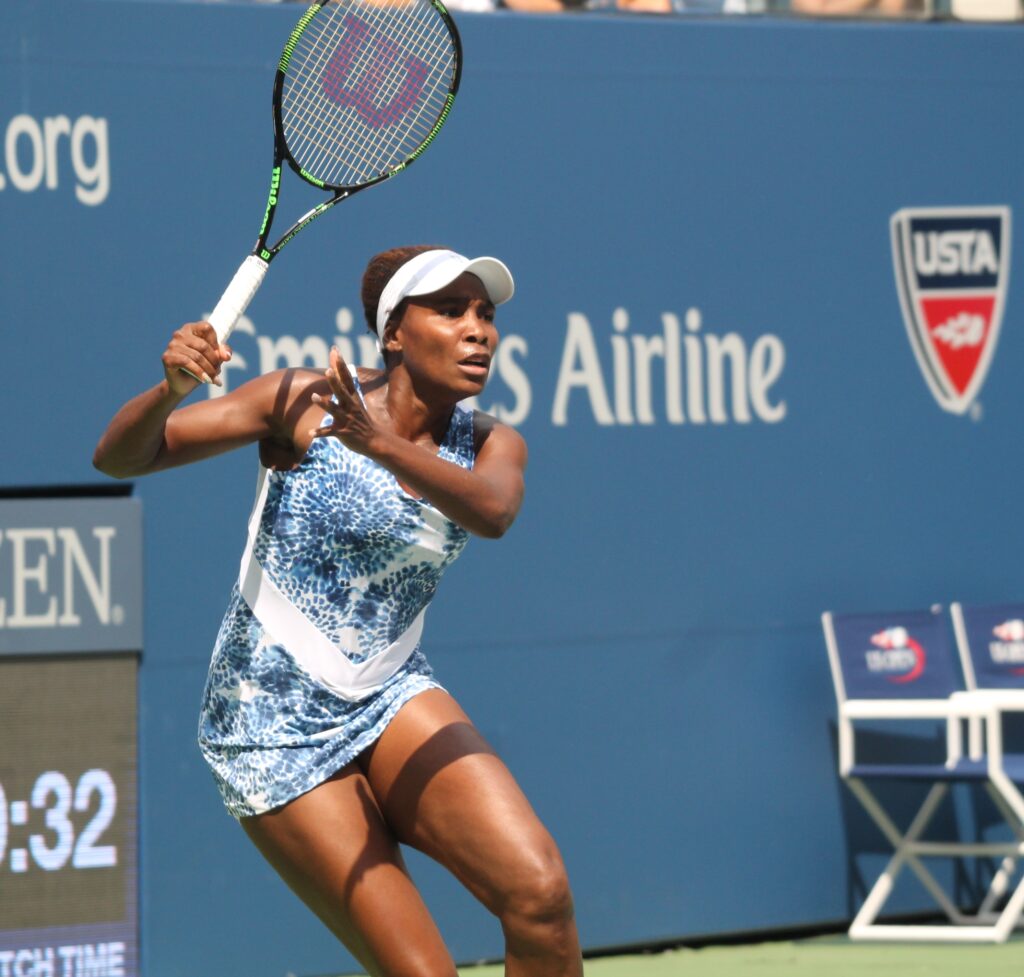
The BNP Paribas Open is set to begin next week, and for the first time in 15 years, American Venus Williams will be playing the Indian Wells tournament.
Venus has not played Indian Wells since 2001, when people accused her and her sister of faking an injury and intentionally withdrawing from her semifinal match against her younger sister Serena.
Serena was booed throughout that 2001 final and it was something her and her sister never forgot. But Serena made a decision to play in the tournament last year, which “paved the way” for Venus to return now.
Venus penned an article in The Players’ Tribune recalling that 2001 tournament and talking about her decision to return. Below are excerpts from her article:
On withdrawing from the 2001 semifinals and the ensuing reaction:
“I remember my quarterfinal match, against Elena Dementieva, like it was yesterday: 6–0, 6–3, a really good win over a really good player. I remember the pain of my knee injury, and how badly I wanted to play in the semis against Serena — before finally accepting that I wouldn’t be able to,” recalls Venus. “I remember the accusations toward me and my sister and our father. I remember the crowd’s reaction, as I walked to my seat, during Serena’s match in the final. And I remember how I couldn’t understand why thousands of people would be acting this way — to a 19-year-old and a 20-year-old, trying their best.”
I remember the hurt I felt. I remember my confusion and disappointment and anger. I remember how the coverage of it at the time didn’t seem concerned with me and Serena, as people, at all — but rather only with the story itself. And with the version of the story that would get the most attention, regardless of the truth. I remember feeling that I had been wronged, and that I had done nothing wrong. I remember feeling that I had unfairly gotten the brunt of the blame for a bad situation.”
On being Serena’s older sister and what came with that:
“For me, being the big sister meant that, when I made my professional debut, I was the only player on tour who looked like me. I was the only player with my skin color, with my hair, with my background, with my style.
Being the big sister meant that, when I became world No. 1 in 2002, I wasn’t just world No. 1. I was also the first black American woman to reach No. 1. And it meant that I had to carry with me the importance of what I had accomplished. And I was honored to do that.
Being the big sister meant that, when my little sister made her professional debut, I became a lot of new things to her — her colleague, her competitor, her business partner, her doubles partner. But I was still, first and foremost, the one thing I had always been: her family. I was her protector — her first line of defense against outside forces. And I cherished that.
Being the big sister … I didn’t take that responsibility lightly. I knew what she was going through — debuting as a professional tennis player, growing up in front of a camera, entering public life as a young black teenager — and I knew how hard that could be. And I knew how much I would have loved to have had a big sister on tour during my first year, and how much pride I took in the knowledge that my little sister had me.”
On Serena’s decision to play Indian Wells last year:
“When Serena decided to play Indian Wells last year, I was so proud of her. She hadn’t set foot onto the grounds since our 2001 tournament — neither of us had.
Leading up to her decision, Serena told me that she had been reading a lot about Nelson Mandela. She had been learning about him, thinking about him — processing all of these complex questions about his journey and his principles.
About forgiveness.
When Serena becomes passionate about something, you can see her eyes light up about it. And I could tell right away that learning about Mr. Mandela was something that she was taking very seriously. And so it didn’t surprise me at all when, soon after, she brought up the idea that there might be this unique opportunity for her at Indian Wells — to not just learn from Mr. Mandela’s experiences, but to apply what she had learned.
I was proud of Serena for so many reasons: for the sense of self she displayed in tackling our complicated history at Indian Wells; for making her decision with such conviction; for conveying her decision with such grace and clarity; and, of course, for playing with that exact same grace and clarity.”
On coming to her decision to play this year:
“And I remember leaving Indian Wells in 2001 feeling like I wasn’t welcome there.
Not feeling welcome somewhere is a hard memory to let go of — at any age. At 20? It’s almost impossible. And so that’s what I did. I held onto it.
But then I saw Serena.
And it was in that moment, seeing Serena welcomed with open arms last year at Indian Wells, that I think I fully and truly realized what being the big sister means.
It means that, for all of the things I did first, and all of the times when I paved the way for Serena, the thing I can be most proud of is this time.
When Serena paved the way for me.
I’ll be playing Indian Wells this year — 15 years after my last appearance, and one year after Serena’s. As the tournament draws nearer, I’m looking more and more forward to it. I’m looking forward to the amazing California grounds. I’m looking forward to the top-notch WTA competition. And I’m looking forward to the fans — who played such an important role in helping to make last year so special.
But most of all, I’m looking forward to playing tennis.”
You can read Venus’ full article on The Players’ Tribune.