
Backhand Cures
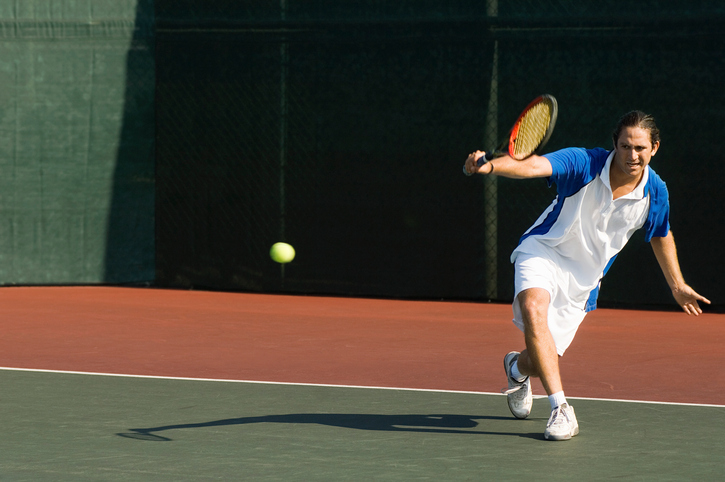
Having problems with the backhand? Here some easy cures that will it improve. We’ll begin with the one-handed backhand.
If you have read my column often enough, you already know that all groundstrokes should have some degree of spin on the ball for control of your shots, the spin could be either topspin or backspin. When discussing topspin the three biggest areas of concern should be the grip, preparation and follow through. The topspin grip is a past the Continental to the left (for right-handed players) so the top knuckle of the index finger is on top of the bevel on top of the handle. The left hand is one key in the preparation; it will take the racket back, placed on the throat of the shaft, to allow for an easy grip change. The left hand stays on the racket to maintain the correct angle and will release as you step to hit the shot, the butt of the handle must lead the swing and never face in towards your body, so when the racket is back, your arm and racket should almost form a 45-degree angle having the butt facing toward the sidelines of your half of the court, not the net. To create topspin, brush up the backside of the ball with a firm wrist (you can add wrist snap as you improve) and follow through completely.
If your shots are sailing long, make sure the grip is on top enough, then, complete the follow through to make sure the ball is on the racket face long enough for the spin to take effect. If your shots are going into the net, you have not angled the racquet enough behind you so the butt is incorrectly facing toward the net. This will cause the face to turn over too quickly and send the shot downward.
The two-handed backhand shot that sails long is not for the same reason. The grips for both hands can be in the Eastern position, there are different combinations that are perfectly fine. The top hand is the power and controlling hand, it will snap up the ball, creating topspin. If you are using the bottom hand for power, the ball will sail because you are basically pushing the ball and the follow-through will be short. You need the top hand to get over the shoulder on your follow-through.
Hitting into the net on the two-handed backhand is caused primarily by just not hitting up the ball enough. Many players think they are finishing over their shoulder, but are really finishing over their elbow … that’s not high enough. Another might be that your backswing is too high. The head of the racquet must be below the ball as you start your forward motion to allow for the low to high swing. If you are really having problems aim three feet above the net to give yourself a greater margin of error.
For all groundstrokes, trying to have your shots land past the service line is a good thing, even if they land short, they have cleared the net.