When Good Enough Isn’t “Good Enough”
Canadian Milos Raonic looks to solidify his mark in Flushing Meadows
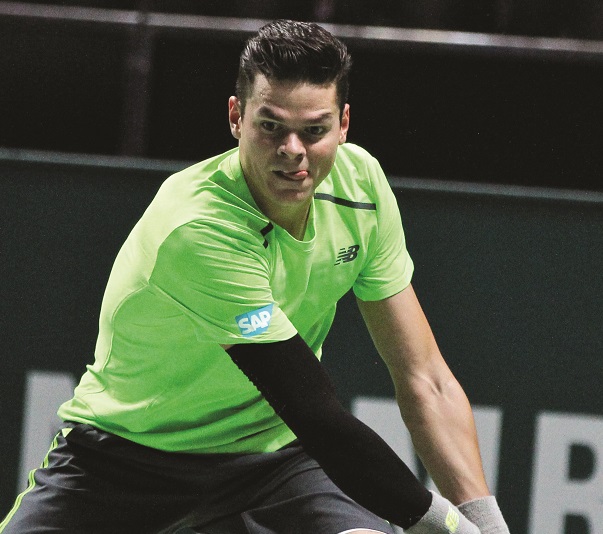
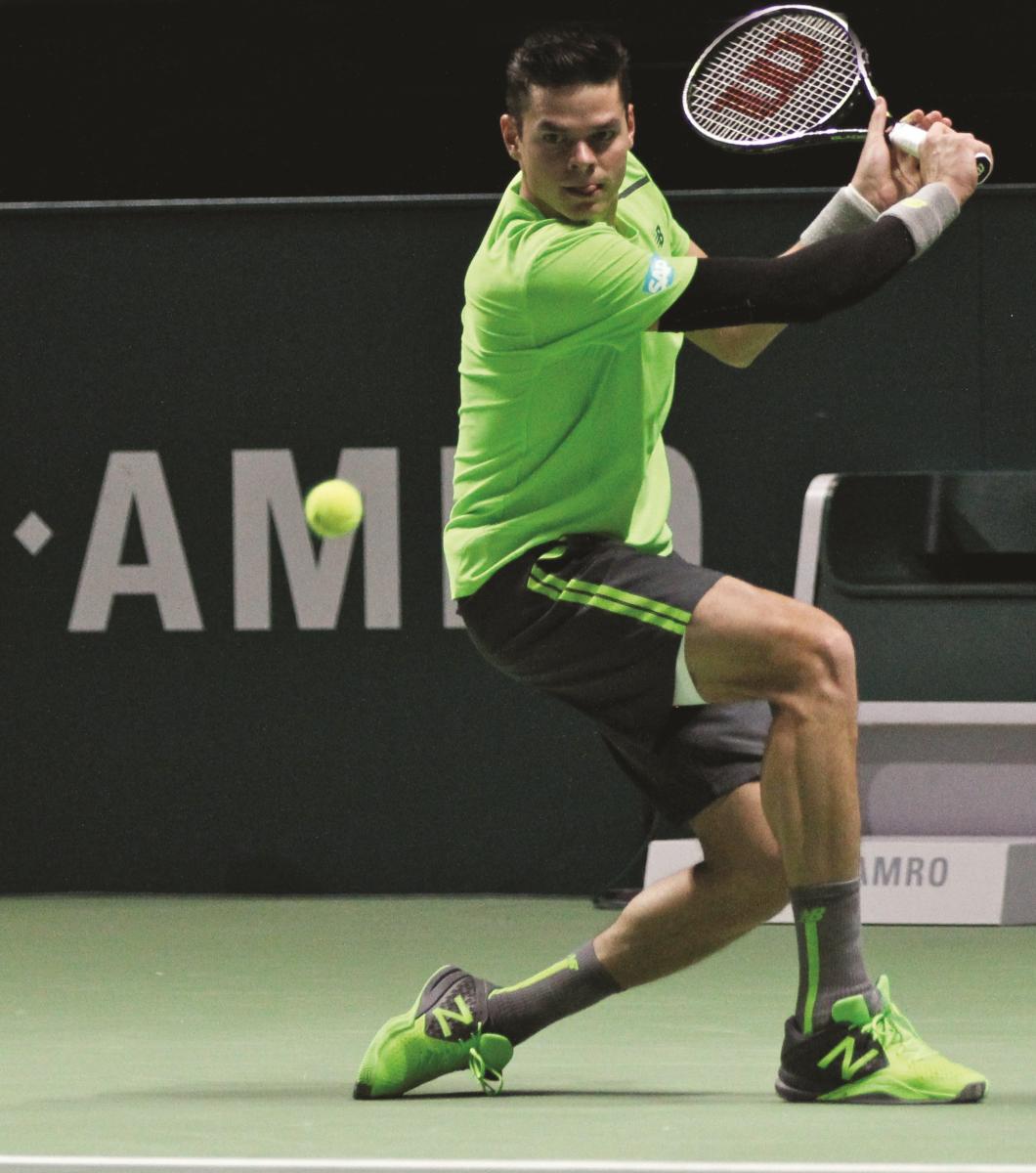
The country to our north is primarily known for its excellence in one sport: Hockey. The success of the Toronto Raptors and Toronto Blue Jays have put Canada’s basketball and baseball franchises on the map, but our neighbors from the north have begun to carve out their niche in the sport of tennis, and much of that has to do with its most successful export to date, 6’ 5” Milos Raonic.
Born Dec. 27, 1990, in Titograd, SFR Yugoslavia (now Podgorica, Montenegro), Raonic is of Serbian heritage. However, due to political unrest and the impact of the Bosnian War, his family moved to Canada in 1994 when he was just three, settling in Brampton, Ontario in the outskirts of Toronto.
He first discovered the sport at the age of six, taking part in a tennis camp at Bramalea Tennis Club in Brampton where the coaches began to realize his potential, and started playing in ITF Futures and ATP Challenger tournaments across Canada, teaming with fellow Canadian Vasek Pospisil for a number of junior titles and appearances at the 2008 Wimbledon Junior Championships, and the 2008 Roland Garros Junior French Championships, where the duo reached the semifinals.
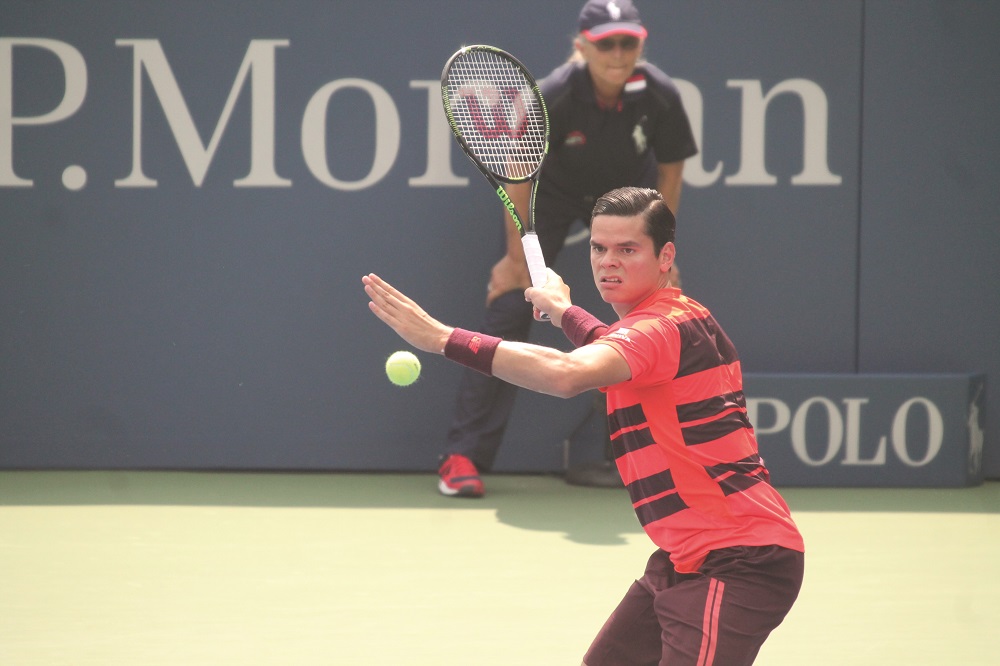
Raonic turned pro in 2008, playing both singles and doubles, eventually capturing his first ATP title at the 2011 Pacific Coast Championships, defeating the ninth-seeded Fernando Verdasco in the finals, 7-6, 7-6.
In 2012, he won his second ATP title at the Chennai Open in India, defeating Janko Tipsarevic in three sets in the finals. He followed up that win with his third career pro title, defending his Pacific Coast Championship with a victory over Denis Istomin in the finals.
The year 2013 saw him win his fourth and fifth ATP titles, a three-peat at the Pacific Coast Championships with a win over Tommy Haas, and in September of that year, defeating Tomas Berdych for the Thailand Open title, 7-6, 6-3.
In 2014, Raonic began to find success at the majors, beginning with a solid run at the Australian Open, reaching the third round in Melbourne before losing to Grigor Dimitrov, but sustained an ankle injury that sidelined him for six weeks. He returned to the courts and made a solid semifinal run at Wimbledon in 2014, where he lost to Roger Federer in straight sets. With the trip to the semis, he became just the first Canadian since Robert Powell in 1908 to reach the semifinals of a major event.
“There’s a lot of good things to take from it,” said Raonic of his semifinal run and loss to Federer. “But when you get here to that point, I think it’s just human nature … the greed of human nature … you want so much more. You feel it in front of you and want to grab it.”
That mentality and motivation has been growing in Raonic over the past couple of years now, and only grew larger following an up and down 2015 season. Raonic posted a record of 33-16 after a great start, which saw him reach the Brisbane finals and advance to the Australian Open quarterfinals, but injuries would take their toll on the 25-year-old.
As he climbed to the number four spot in the ATP Men’s Singles Rankings, the big Canadian just couldn’t shake the injury bug.
“There wasn’t a place it wasn’t bothering me,” said Raonic of a foot injury following a loss at Wimbledon. “First my ankle, then the hip, and then the back … then when those things aren’t working, you just put too much pressure on your shoulder, and then your shoulder begins to hurt.”
Raonic’s 2015 season ended with him withdrawing from three separate tournaments, leaving a lot to be desired heading into 2016.
But in 2016, Raonic seems to have turned the corner, shrugged off the injury bug and is taking his game to another level, showing poise, confidence and diversity in his game which has allowed him to become a consistent threat.
He started off the year with a monumental win, knocking off Roger Federer in the finals of the Brisbane International in Queensland, Australia, before heading to Melbourne for the Aussie Open.
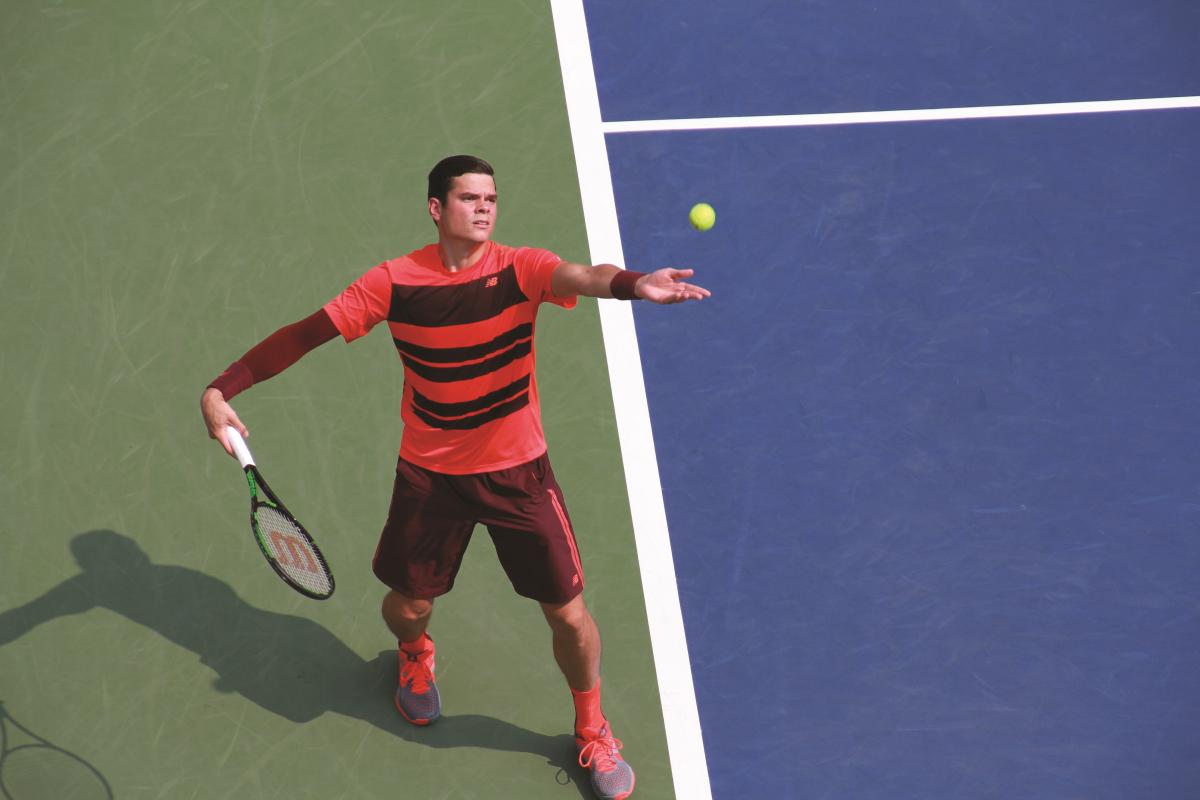
Raonic put together a fantastic run at the year’s first major, knocking off Gael Monfils and Stan Wawrinka to advance to the semis where he would meet Andy Murray. Raonic would go up two sets to one and was on the verge of a trip to his first Grand Slam final, but the injury bug bit him once again, as an upper leg injury slowed the big Canadian and Murray completed his comeback for the win.
“It was just difficult to push off my leg with my adductor midway through the third set. That’s what it was. It’s unfortunate,” said Raonic of his Melbourne run. “It was probably the most heartbroken I ever felt on court, but that’s what it is. I’m happy with where my tennis is at right now, I just wish I could play tennis.”
It was yet another setback for Raonic who continued to show that he was knocking on the door of the elite level, a level he knew he could compete at.
He continued to persevere though, fighting through injuries and disappointing losses to play the best tournament of his career at the All-England Lawn Club at Wimbledon. With the help of John McEnroe, the newest addition to Raonic’s coaching staff, he became the first Canadian to ever reach a Grand Slam singles final at Wimbledon 2016.
“If you had told me before when I was just doing commentary, ‘Name five or six guys who could possibly win Wimbledon,’ Milos would have been one of them,” McEnroe said of Raonic.
It wasn’t to be, as Raonic would lose to Murray yet again in the Wimbledon finals, but his play demonstrated just how far he had progressed.
One of the main things McEnroe was on board to help Raonic with was playing in the big moments, dealing with the pressures and expectations of Grand Slams, and having the self-confidence to advance to the next level.
“I believe I definitely have that ability within myself. There’s not a shadow of a doubt from myself. The question is: Am I going to make the most of it when those opportunities arise? Nobody’s going to give me those opportunities … I have to work extensively to give myself those opportunities,” Raonic said. “There are other guys who want it. I’m going to try to find every solution to every issue I may have … things I need to improve upon on a day-to-day basis to give myself that opportunity. That’s what keeps me the most motivated.”
Originally known as strictly a big server, Raonic has shown the ability to mix up his shots with improved volleys and his hitting from the baseline. He began to dictate more points and control the pace of play himself, rather than cater to his opponent and strictly rely on his power. Raonic ranks among the strongest servers in the Open Era, winning 91 percent of service games to rank third all-time.
“For a big guy, he moves well. He has improved upon his fitness the last few years,” Federer said of Raonic. “Tactically, he’s also better now than he’s ever been. He’s made a conscious effort to playing closer to the baseline, which before when he was working with the Spanish coaches, he was far from the baseline.”
In July, Raonic raised some eyebrows when he decided not to represent Canada at the 2016 Olympic Games in Rio, citing fears over the Zika virus.
"This was a difficult, personal choice and I do not wish for it to impact the decision of any other athlete heading to the Games," said Raonic of his decision to sit out of the Olympics.
Not heading to Rio, Raonic joined French Open semifinalist Dominic Thiem, American John Isner and Spain's Feliciano Lopez to play in ATP Tour events instead of the Olympics, as these tournaments offer ranking points—while the Games do not. Like others opting-out of the Rio Games, Raonic is hoping that some rest in early August will lead to a strong push for Grand Slam glory at the U.S. Open.
The hard courts in Flushing Meadows will play very well in the big-man’s power game, and his improved variety will allow him to take on any type of opponent. He has never made it out of the fourth round in Flushing Meadows, but is looking to change the tide this time around.
Raonic should be considered one of the favorites at this year’s tournament. Past U.S. Open losses have occurred in heartbreaking fashion, including defeat in an overnight, five-set battle with Kei Nishikori at the 2014 U.S. Open. Losses of that nature can either make or break a player, and Raonic seems to have turned a corner in terms of building off of and learning from losses.
Success for Raonic has not been limited to just tennis courts. While recovering from a hip injury at Wimbledon, he decided to become involved with philanthropic work, focusing on helping disadvantaged children. In 2012, he established the Milos Raonic Foundation to support children from disadvantaged backgrounds in order to remove economic, physical and other barriers that might prevent them from becoming healthy, productive members of society. This includes providing kids who need them with prosthetic limbs to help them reach their full potential.
As of 2016, the Milos Raonic Foundation had awarded more than $120,000 in grants to the Holland Bloorview Kids Rehabilitation Hospital, and $30,000 to the Canadian Paralympic Committee.
Having already seen the potential on Milos Raonic’s racquet, it may all come together in a New York minute this fall, as he looks to notch the first of what he hopes to be multiple Grand Slam titles. Despite the results that lie ahead in Flushing Meadows, the sport has gained a new role model in Raonic, as success on the court and philanthropic efforts off the court have earned the big Canadian accolades from those in the sporting world and beyond.
“In both my tennis game and my life off the court, I constantly strive to get better at everything I do every day … it’s an ongoing goal,” said Raonic. “I’m never satisfied with just enough. That’s not how I think. Whether it’s on the court or off, good enough isn’t ‘good enough.’ I can always do better and I work hard to make that a reality every day.”