
Game, Set, Life
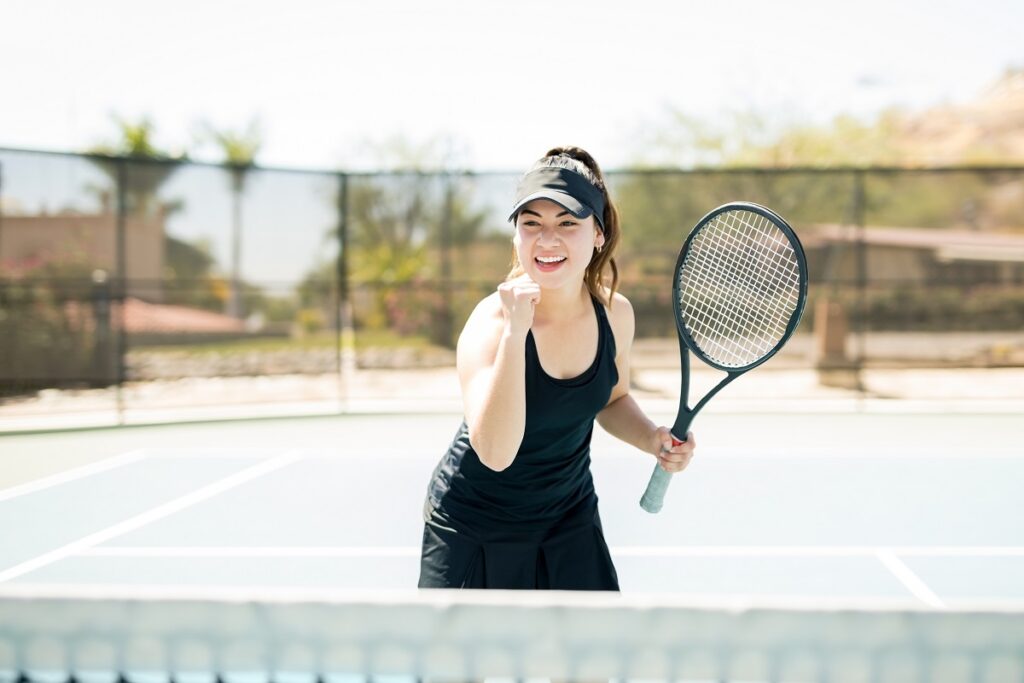
We are in the final production stages of our unique book, a book that literally creates a written conversation on the education that takes place within athletic experiences. Having grown up together and experiencing many incredible sports moments both together and apart, and now having both grown into experienced and successful coaches in different sporting arenas, our discussions in this book are an attempt to share our learned knowledge in hopes to help coaches, athletes and parents navigate all sorts of athletic challenges. The following is a snippet from one of our favorite chapters:
Confidence Is The Key
Jay begins: On a late summer day in 1996, I nervously walked into my interview for the head coaching position at Bowling Green State University when I realized something. If the BG Directors were considering me at the age of 24 on par so to speak with the other more experienced coaches set to interview with them, then I wondered if they thought of not just how good I was at that moment, but how good I would be in five years. My thought was that if it was safe to assume that my speed of coaching skill growth would be much more rapid than those coaches (partially because I knew so little!), then if we were similar now, that meant that I would be a much better coach than the other candidates five years down the road! Now, I just had to sell that to the hiring committee! After announcing my exact age early in the interview, I created some chuckles when I assured them that I WILL get older! That was the beginning of my confident persuasion, and I was happy to learn days later that they bought it, making me the youngest Division I head coach of any sport in the country!
Mike jumps in: Jay shared a great example of self-confidence. Sometimes we confuse self-confidence with arrogance; they are very different concepts. I have tried for many years to teach my players the difference between being confident and being cocky. When a player walks onto the field, court, or course, coaches want players to be confident. The big question is how do you teach confidence? What I have learned is that a player can’t simply tell themselves that they are good, and confidence happens. Self-confidence is achieved through a series of positive events, and most of those events need to occur in practice!
Jay adds: I love a mix of games and goals during practice and I also love the production of pressure, especially when the presence of pressure in practice is aimed to build confidence. Watching my dad coach basketball at a young age gave me all sorts of free coaching lessons, and one of those was the way he operated the end of just about every practice. His simple “free-throw drill” started with his squad lined up around the key, and one by one, they would go up to the line with the simple task of making one free throw. The goal was for the team, one player at a time, to make ten straight shots, but every miss would result in a team sprint. The sprint was the “produced pressure”, and the goal of enhanced confidence was felt every time that last player hit the 10th shot. Now, there were times that this exercise would go on longer than any of the players hoped, and those sessions actually produced the most stress, but also the largest enhancement of confidence. As I often say, stress is a great tool, and in the most stressful of free throw sessions where the team had to run and run and run as the missed free throws added up, the feeling felt when that 10th free throw hit the bottom of the net was borderline euphoric, and not only did that clutch player attain a greater level of confidence in himself, the entire team also became more confident in him, and about themselves as well.
I learned the importance of confidence at a very young age, and as I aged, I needed all of it to compete in the sport I loved, tennis. Tennis is an amazing sport because it REQUIRES confidence! Singles players are out there all by themselves, and they are constantly asking the question, “Can I win?” If they can get to the point where they truly believe they can, then most likely, they will. At the end of my junior year, I was still only 5’6”, 120 pounds (I’m 6’4” 220 now! And yes Mike, I know I need to lose 20 more!!). As a munchkin tennis player, everyone I played was bigger, and there were times I questioned how I could beat these bigger dudes. But then one day, I was competing with a kid almost a foot taller than me and the football team walked by the courts. They stayed to watch for a while and started cheering me on (and maybe threatening my opponent a little). This support made me feel taller actually, and I ended up crushing the kid! That night, I wrote on a small piece of paper, “confidence is the key”, and I tacked it on my bulletin board.
As I learned how to control my own confidence, I became much more powerful on the court. I really became my own coach. When thoughts would pop into my head, I would work to only let the ones that would add to my confidence slip past my brain’s filter. The bad ones would mostly get discarded like trash. I learned that confidence is ultimately only controlled by one thing, the person choosing to be or not to be confident.
One of my favorite Bowling Green players ever, Michael, often struggled to control his emotions. I once asked him:
“What is the percentage of thoughts that soak into your focus during a match that helps you versus hurts you?” He was super honest and estimated that 90% hurt him. I then asked him if he thought it would be good if he could get to 50/50. He just smiled, and we got to work. I got Micael to first realize that HE did have control over the thoughts and how deep they were to sink in. I showed him how well he could play when allowing the helpful thoughts to occupy his focus, and I got him to learn to replace the damaging thoughts with either positive or constructive thoughts. After a month of constant mental work, Micael got to 50/50, and by no coincidence, helped us have a great season!
Mike adds: Hopefully, everyone catches that sentence of “after a month of constant mental work.” Confidence is not achieved by a single coaching trick. It is achieved by solid coaching and practice over a period of time. What makes everything more productive is when the player recognizes their own negative self-talk, and wants to reduce it.
Jay quickly concludes: “Confidence is the key” – that is what I wrote on that piece of paper and tacked to my bulletin board that was hung in every college dorm room. I read that note hundreds of times, and I believe strongly in it to this day. Coaches need to know when to work on physical skills and when to work on the mental and emotional side. It is one of the toughest balances to achieve, but is likely the most important coaching skill the great ones possess. I recently received this compliment from the parent of one of my most promising players, “Thanks Jay. She always walks off the court with more confidence after she spends time with you. That may be your best gift.” Balance achieved!