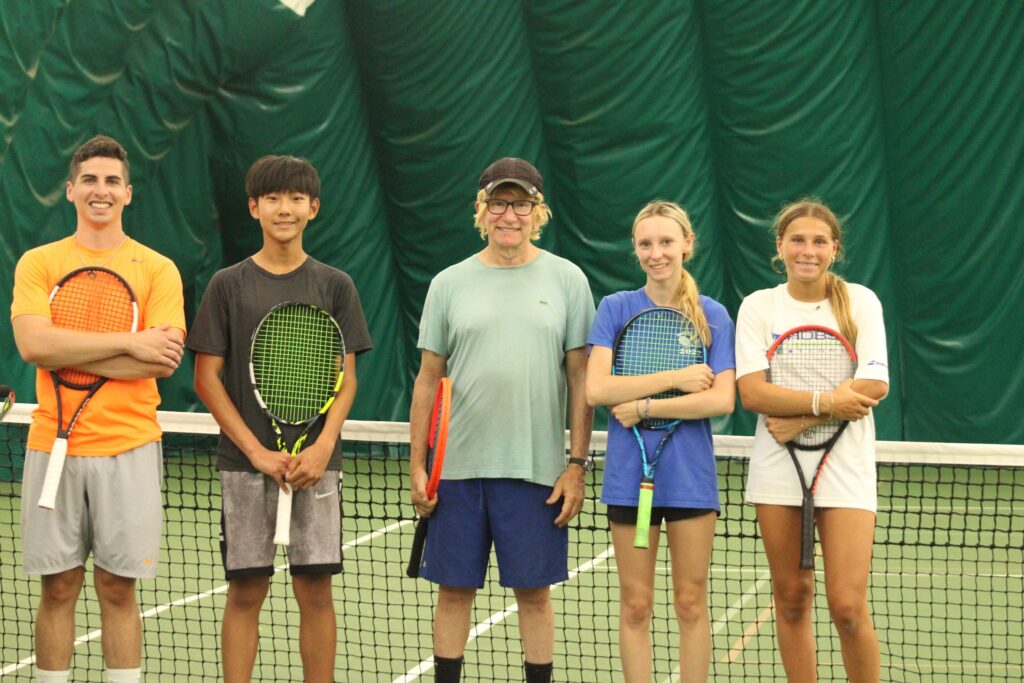
Beyond the Baseline: Steve Kaplan, Bethpage Park Tennis Center
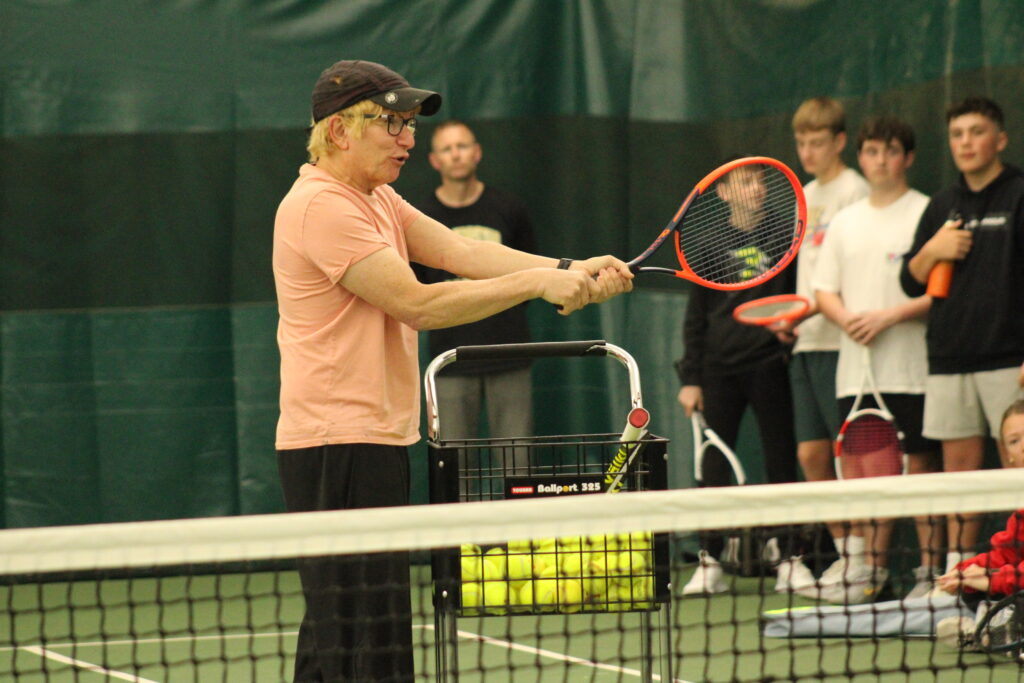
The definition of a coach is very broad, but Dictionary.com describes it as “someone whose job is to provide training for people, or help them prepare for something.” Now, while this definition may be technically accurate, it doesn’t begin to scratch the surface of the importance of a coach in one’s life, and doesn’t come close to properly encapsulating a coach like Steve Kaplan.
For more than five decades, Kaplan has spent his days on the tennis court, whether that was on the campus of St. John’s University, what was formerly Syosset Racquet Club, on the public New York City courts with the City Parks Foundation or currently at Bethpage Park Tennis Center where he is the owner and managing director, guiding his students not only through tennis technique and fundamentals, but instilling important, foundational life lessons and skills.
“There’s a concept that I learned early in my career that impacted me, and that was to “synergize because the whole is greater than the sum of its parts,” Kaplan says. “And when I looked at tennis, what occurred to me was what you learn on the tennis court, you can take into the classroom and you can take into all facets of life. And what you learn in the classroom or in life, you can take onto the tennis court. They are all connected. So my goal when I started was to improve people’s tennis, but also use tennis as a vehicle to help people ascend in anything they choose to do.”
And it’s precisely that outlook that Kaplan has used to teach his students all these years, and has been at the heart of his dedication that makes him stand out in a sea of talented, dedicated coaches on Long Island and beyond.
Kaplan’s tennis journey began like a lot of youngsters, tagging along with his father every weekend. He’d watch him and his friends play and took a liking to the sport, but it wasn’t until he turned 15 that he took tennis seriously.
“Like a lot of kids who grew up in my generation, in the late 60s and early 70s, you played a lot of different sports. You played football in football season, basketball in basketball season, etc.” Kaplan recalls. “But when I turned 15, I began taking formal tennis lessons with George Seewagen at what was then Syosset Racquet Club, and became a very avid player. I didn’t have a lot of money, so I would work at the club a little bit to make some extra money, and that’s really what got me into enjoying tennis a lot.”
He earned a scholarship to St. John’s, where Seewagen was also the head coach, which was extremely beneficial because he was able to receive a free education from the school.
After he graduated, Kaplan worked with a number of high-ranked players, and began to fall in love with coaching and teaching while continuing his formal education and passion for learning.
“What I recognize now that I didn’t really recognize at the time is that I loved tennis as much as I loved teaching and mentoring,” said Kaplan. “If you would have asked me in my 20s, I would have said it’s about loving the sport, but with over 45 years of experience I now recognize that I love teaching, coaching and mentoring.”
The aforementioned Seewagen provided a significant influence on Kaplan, which made it fitting that the latter was honored with USTA Eastern’s George Seewagen Man of the Year award in 2024.
“George was definitely a very strong influence on me, and what was the defining characteristic about him was that he was a true role model,” said Kaplan. “One quality he had was temperance. He was such a leveling, calming influence on his students, he never raised his voice. He was definitely more of a teacher than a technical tennis coach, and I learned from him firsthand just how much influence a coach can have on the young people they work with. He built a tremendous culture of excellence, which helped in creating an incredible amount of top players, but not only that, most of his players would go on to have tremendous success in their post-tennis careers, which is a testament to that culture they grew up in.”
And for the last quarter century, Kaplan has used that philosophy to mold each and every player that has walked through the doors of Bethpage Park Tennis Center, helping to build on the type of culture that he learned from Seewagen.
The opportunity to build the Bethpage Park tennis facility in Farmingdale arose at the turn of the century, when New York State made the state park available for concessions, where private businesses can operate on public parks. Kaplan was experienced with this sort of arrangement having been involved with City Parks Foundation in New York City, and thus found the prospect of developing the tennis facility at Bethpage Park intriguing.
“It was an outdoor facility at the time, and we enclosed eight of those to transform it into an indoor facility,” Kaplan recalls. “We officially opened in 2000.”
Kaplan’s technical and tactical expertise makes him one of the top coaches in the nation, but what he has provided the tennis community is more than coaching. He has used his influence, and the post-tennis success of many of his students, to give back. More than a decade ago, he launched Serve & Return, a 501c3 charity that has provided numerous free programs for Special Olympics, military veterans, young adults with autism, under-resourced children and many more in excess of seven figures. Prior to launching the charity, Kaplan funded their classes and programs free of charge on his own dime, but thanks to his charity and the help of generous former players who have gone on to be successful in finance and other fields, he was able to expand on that.
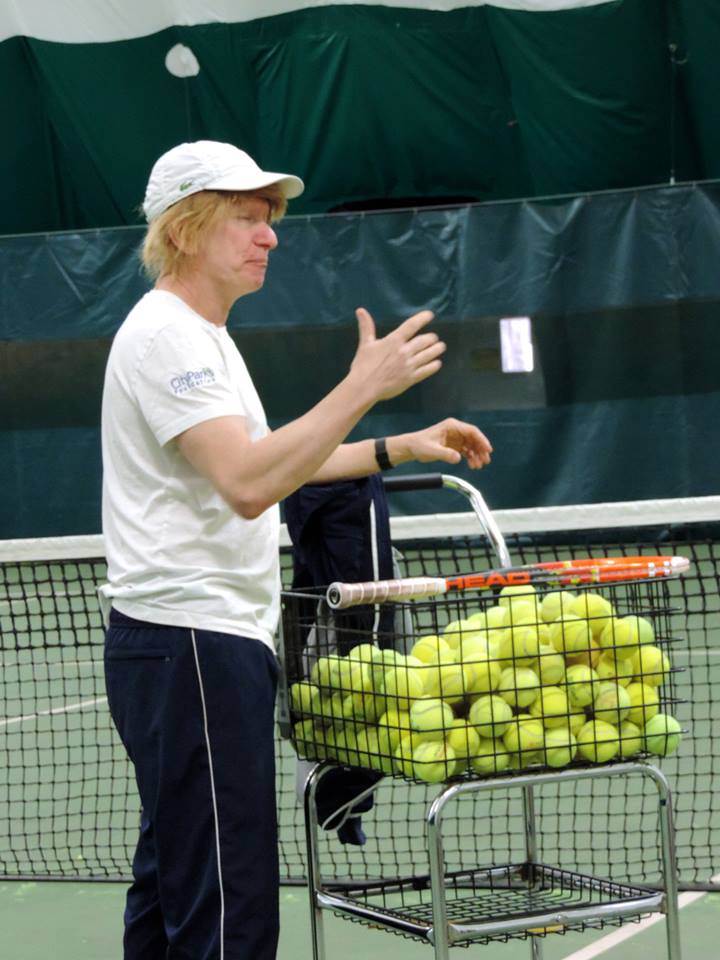
Beyond that, just this year, Kaplan has formed another charity down in Lake Nona called “On The Rise.”.
“We’re going to provide tennis instruction , events and mentorship through UCF athletics on the USTA National Tennis Center Courts as well as STEM education, teaming with some very successful people in the medical field that I’ve mentored,” said Kaplan. “ In addition, to help educate we will provide food security and enhancement , as well as other resources for children with cancer in the greater Orlando area.”
He added:
“When you have more, you have more to give.”
Kaplan practices what he preaches. He advocates strongly for proper fitness and nutrition for his athletes, but it’s not just talk, he remains an active athlete himself. He is an avid cyclist, frequently going on 500 mile bike packing trips to appease his love of being on the bike, and maintains a healthy lifestyle that allows him to do it at the highest level he can.
Even after all of these years, Kaplan says he is still learning himself. He believes strongly that just like players, there is always something that a coach can improve on, get better at, or even learn for the first time.
“If I’m telling my students to continue to learn, then I have to be someone who’s open to learning and growing myself,” he explains. “Which is why I continued with my education and received my doctorate. It’s much more powerful to demonstrate that mindset to your students, if you are actually doing it yourself.” He added ” Tennis is a great vehicle to enhance your education but it is not the entirety of your education.”
The amount of players he has helped over the years is a seemingly never ending list of young people he has guided to remarkable accomplishments both on and off the tennis court. One of those players since the age of 5, Paige Wygodzki, a top-ranked player in the country who has committed to play her tennis at the University of North Carolina, summed it up perfectly:
“If Steve is your coach, he isn’t only that, he’s also your mentor. He’ll be there for you whenever you need, and he has such a deep care for his players.”
As Kaplan prepares to embark on a new year, he is proud of the legacy he has built as a tennis coach and teacher over nearly 50 years. But not because it has garnered a reputation for himself, but because of the impact it has had on those under his wing.
“I think many of us spend a good part of our career focused on proving ourselves , but as you get older, you may stop trying to do that, and instead focus on expanding your positive reach in the world,” Kaplan said. “It’s not just the relationships you form with your players that binds you, but it also binds the players to each other. I have a lot of former players who stay in touch with each other, and help out with the different programs we do, and that’s something upon reflection that I have really grown to appreciate. Forming that positive culture of excellence is one of the important things you can do as a coach.”