
“Mommy & Me”: What’s The Point?
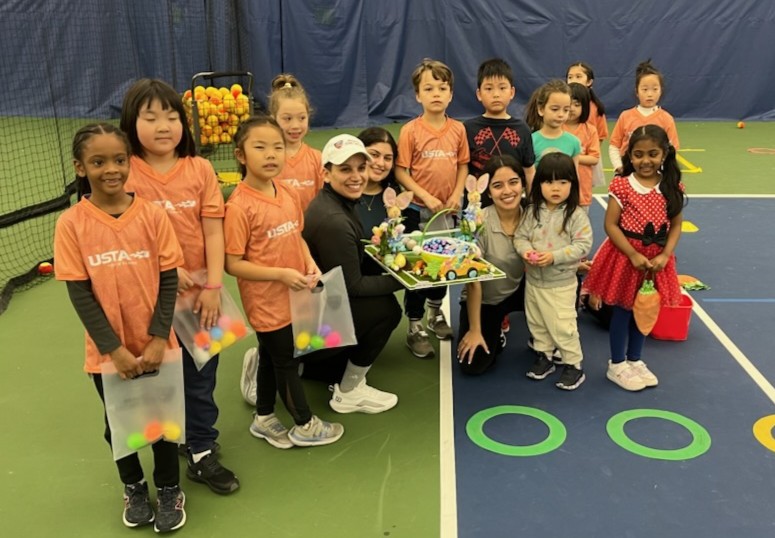
Our passion for introducing tennis to families at an early age and stage at the USTA Billie Jean King National Tennis Center requires a thoughtful, patient, and developmentally appropriate approach. At the age of 3, children are still developing coordination and receiving skills in gameplay. Instead of emphasizing structured gameplay, “Mommy & Me” tennis classes provide an opportunity to build foundational motor skills, foster emotional connection, and create a positive first experience with the sport.
This is not simply about teaching tennis—it is about nurturing growth, encouraging exploration, and strengthening the bond between parent and child.
At the core of any successful “Mommy & Me” class is connection. Three-year-olds rely heavily on familiarity and emotional security when entering new environments. Having a parent actively participate allows the child to feel safe while trying something new. These shared moments on the court help create a sense of trust and comfort, turning tennis into a positive and enjoyable experience rather than a pressured activity. Before a child can learn a sport, they must first feel confident and supported within it. My favorite aspect is the foundation and pathway we create from Mommy & Me to our Red Aces and Red Champs classes.
Our jobs are to help parents cultivate an environment that focuses on understanding development of motor skills before technique. At this age, children are still building fundamental skills such as balance, coordination, hand-eye coordination, and spatial awareness. Because of this, tennis instruction should not prioritize mechanics like swinging the racket over the shoulder. Instead, the focus should be on activities that promote movement and coordination—throwing, catching, rolling balls, running, stopping, and engaging in playful exercises. These foundational skills are essential and will naturally support proper technique as the child grows.
Managing expectations is another key component of a “Mommy & Me” class. Success at this stage should not be measured by perfect swings or consistent rallies. Instead, success looks like a child participating, staying engaged, showing curiosity, and enjoying the experience. It is normal for three-year-olds to have short attention spans and moments of distraction. These behaviors are part of their development, not signs of failure. By shifting the focus from performance to participation, both parents and children can have a more positive and meaningful experience.
These classes also serve as an opportunity for parents to develop patience. As much as the child is learning, the parent is learning as well—learning to allow their child to explore, to make mistakes, and to progress at their own pace. The role of the parent is not to control the session, but to support and encourage. Meanwhile, the child is learning how to listen, interact in a group setting, and try something new. The coach plays a vital role in guiding both the child and the parent, creating an environment where learning and enjoyment can coexist.
Play is the foundation of learning at this age. In a “Mommy & Me” tennis class, games are not simply a way to pass time—they are the primary method of teaching. Through play, children develop confidence, coordination, creativity, and are introduced to the Athletic Development Model. When tennis introduction aligns with these in a playful and engaging way, it becomes something the child wants to do, rather than something they feel required to learn. And most important I am happy to be a part of a team that strives to introduce these in a welcoming manner.
Ultimately, “Mommy & Me” tennis is about building a long-term relationship with the sport that starts here within. Children who are introduced to tennis through connection, play, and positive reinforcement are more likely to remain engaged and continue developing their skills over time. This approach prioritizes enjoyment and growth, setting the foundation for future learning and potential competitive play.
In conclusion, “Mommy & Me” tennis here at the National Tennis Center is all about parental bonding through sports and developing essential motor skills with patience. By focusing on these elements, we ensure an environment for parents and juniors to progress into the next programs. Whether on the courts, or through our seasonal tennis art displays, we aim to promote the love of the game—at your child’s pace.