
Dealing With Knee Pain
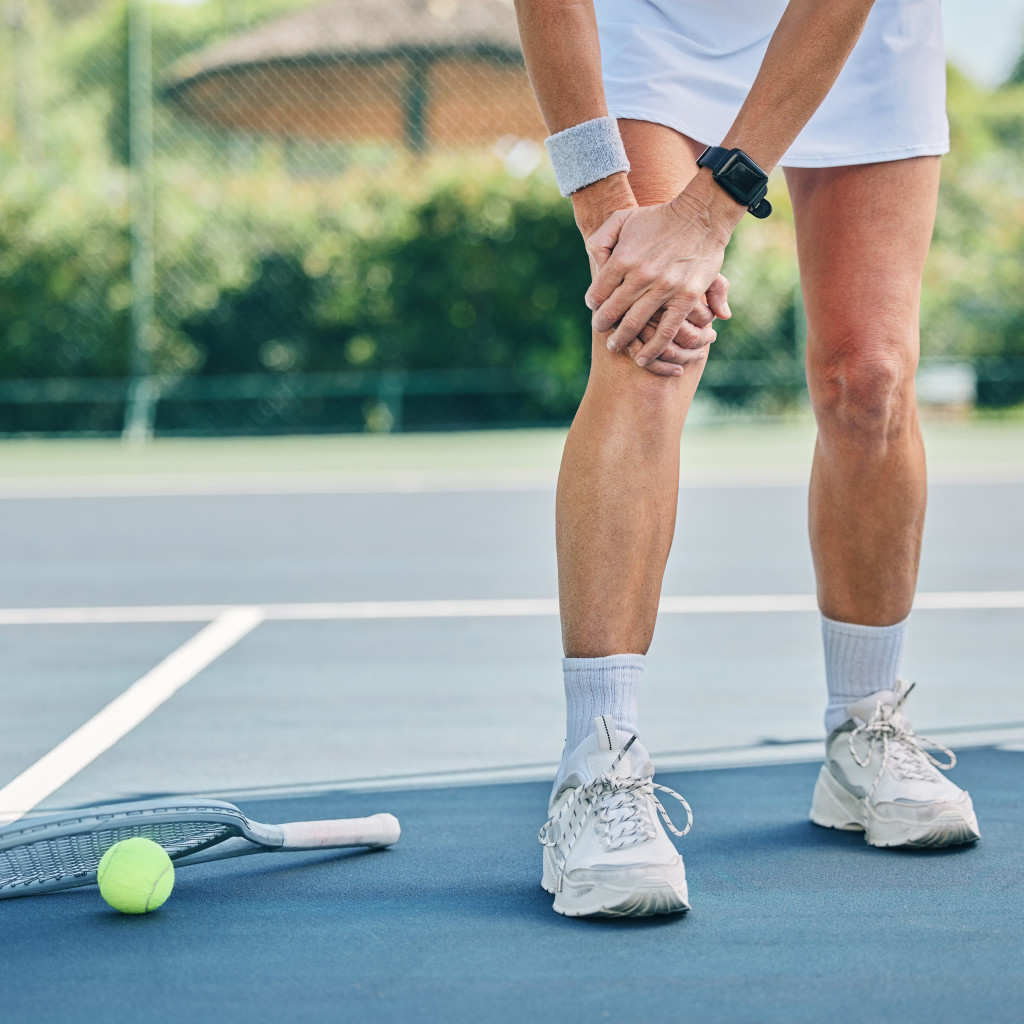
Hard courts dominate the tennis scene on Long Island. While they provide a consistent, fast-playing surface, they also place significant stress on the knees. Compared to clay, hard courts absorb far less shock, meaning more force travels directly through your joints with every step, jump, and stop.
On clay, players can slide into shots, spreading out impact over time. On hard courts, stopping is more abrupt, creating higher stress on the knee. The surface also has more friction, so when your foot sticks and your body rotates, the knee absorbs that twisting force. Over time, this combination of impact and torque can lead to issues like patellar tendinitis, IT band irritation, and general soreness.
Many players assume knee pain starts in the knee, but it often comes from weakness in the hips and surrounding muscles. Strengthening these areas reduces joint stress.
Here are some great hip strengthening exercises:
→Glute bridges: lie on your back with your knees bent and lift your hips by pushing through your heels while squeezing your glutes at the top.
→Bulgarian split squats: place one foot behind you on a bench and lower into a lunge using your front leg.
→Lateral band walks: they are done by stepping side to side with a resistance band around your legs to activate the hip stabilizers that help keep your knees aligned.
→Step-downs: slowly lower one foot off a step and return.
Tight muscles also increase pressure on the knee. I am a big fan of yoga as a supplement to any sports training. At the very least, before you get moving before your game, warm up a little bit and stretch your quads, hamstrings, hip flexors, and achilles.
Small changes in movement on the court can significantly reduce knee stress. Stay low by bending at the hips rather than just the knees, take quick adjustment steps instead of lunging, avoid locking your knee when stopping, and focus on decelerating under control. Your legs should act like shock absorbers, not rigid structures.
It also helps to train your movement patterns directly. Lateral shuffles build balance and control, split-step drills improve reaction timing, and deceleration drills—short sprints followed by controlled stops – teach your body how to absorb force safely on hard courts.
And lastly, proper footwear is one of the simplest ways to protect your knees. Tennis shoes designed for hard courts should provide good cushioning and lateral support. As shoes wear down, they lose their ability to absorb shock, increasing stress on your joints.
The repetitive stress of playing on hard-core can definitely be tough on your knees, but with the right training, stretching, and form, you can be in it for the long game.
If your knees, or any joints, are bothering you, don’t hesitate to make an appointment, and I’ll be happy to get you back in action as best I can.