
2014 Wimbledon Preview: Serena Looks to Rebound at Third Slam of the Year
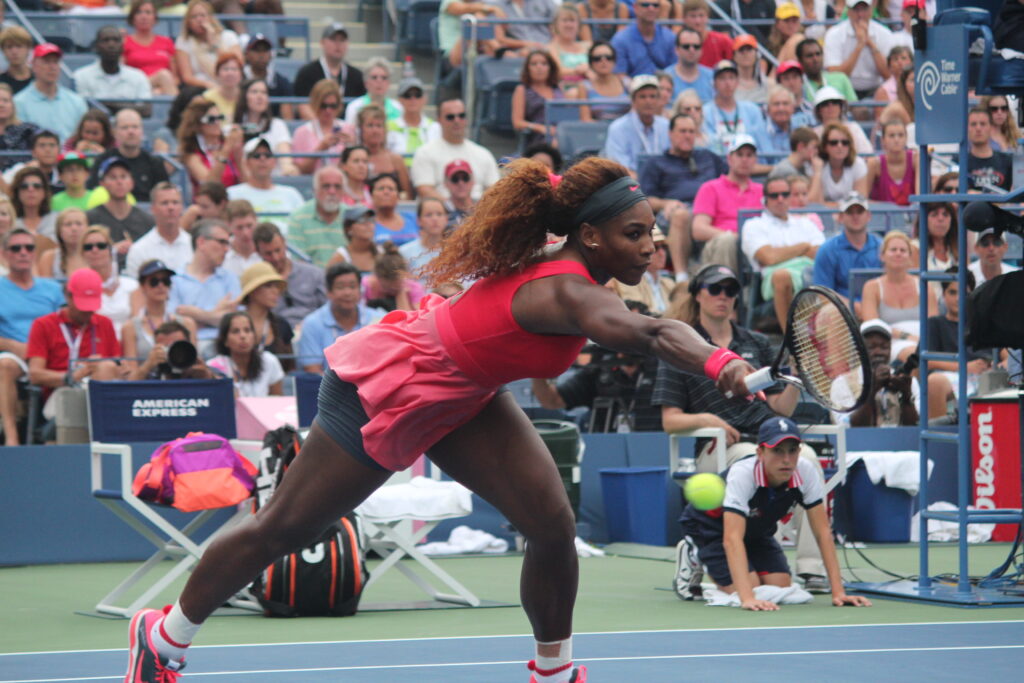
With one tournament that promises nothing and another draw that seems like it presents a given outcome, the 2014 Championships at Wimbledon are upon the tennis world, and not too far into the near distant future, two winners will be crowned.
The Men’s Draw
It is kind of odd to think that after Rafael Nadal claimed the ninth French Open title of his career, that he is not even truly under consideration to compete come the second week come Roland Garros. When the draw for the third major of the year came out, a handful things stood out:
Nadal has a chance of reliving his nightmares in the first week
In 2013, Nadal got a pretty good scare in the second round of the French Open. A Slovakian lefty named Martin Klizan, who has a very pushy, aggressive type of game, took the first set off of Nadal. He gets another shot in the first round of Wimbledon, as two lefties face off in what should be a tricky match. Klizan is the type of player that can pull anybody off of the court with rolling forehands that land short in the box and jump out wide, which has a chance to test Nadal’s movement on the grass.
►Lukas Rosol: No tennis fan will soon forget the five-set thriller delayed after the fourth at Wimbledon in 2012. Lukas “Lukas Oil” Rosol, as commentator and former player Brad Gilbert likes to call him, swung for the fences and surpassed it by miles, winning in what was at the time arguably one of the greatest upsets in tennis history. Rosol is a hothead to say the least, calm, cool and collected when winning, yet easily frustrated when losing. Nadal needs to get on top of the hard-hitting Rosol early to not only get into his own rhythm, but to exercise the mental barrier between his opponent and himself.
►Dr. Ivo Karlovic: Karlovic looks to perform a heart-attack inducing surgery in what will likely be the third round matchup for Rafa. Karlovic might be on the top of the “close but no cigar” list for players who have come up against Nadal. The big-serving (understatement) Croat has pushed Nadal to a tie-breaker in the final set on two of the four occasions on which the two have met, showing that he can in fact compete with the greatest lefty to ever live. Karlovic has refined his groundstroke game, getting into the service games of better players by the week, giving him a shot against anybody he plays. The giant is known for his dagger of a backhand slice that skips through any court, which could cause massive trouble for the Spaniard on the slick grass of Wimbledon. If Nadal isn’t moving as he should, look out in this one.
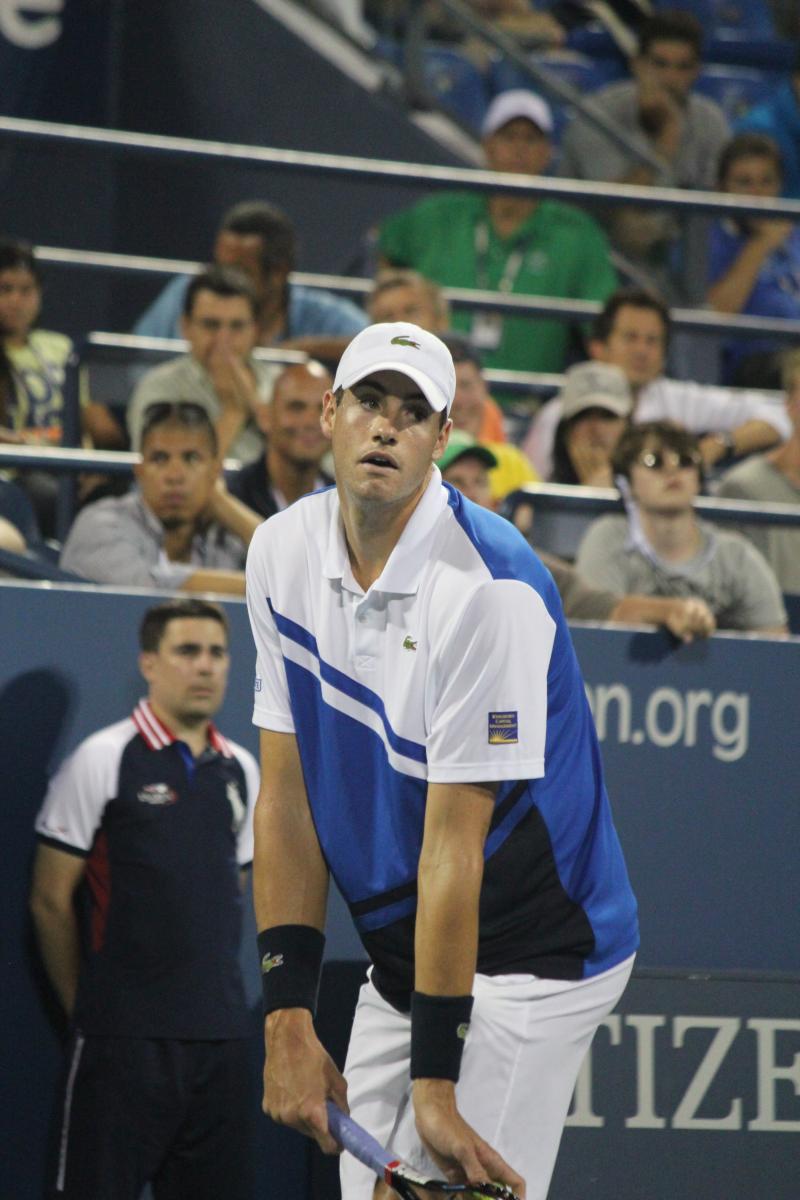 Americans will not be getting very far in this tournament.
The highest-seeded American male in Wiimbledon is John Isner, the big-serving Georgia-alum who has the tools to make a run at a Slam. This year’s Wimbledon? No chance. It feels like every time Isner gets a good looking draw at a major, he either gets pushed early, inhibiting his ability to make said run, or he gets hurt. Last year’s Wimbledon is a prime example, as the big man was in the quarter of the drawn which Jerzy Janowicz played Lukasz Kubot for a semifinal spot. If Isner hadn’t retired in round two after getting tested in the first, he without a doubt should have rode his big serve all the way to that point. His draw is eerily similar this time around, as he has what should be two relatively easy matches early on, with the tricky lefty Jarko Nieminnen being the only one who can push Isner. Feliciano Lopez in round three is a lefty version of the American without the groundstrokes, which shoul be a tiebreaker-laden affair with the American coming through. As the rounds go on and on, it may seem weird that Isner should keep on winning given the title of this point, but Isner’s last win would come against Australian Open champion Stanislas Wawrinka in the round of 16. The Swiss star does not like the grass, struggles with low balls accentuated by the grass, and more than likely would be too intimidated in the quarterfinals against countryman Roger Federer anyway. In the quarters, Isner is not beating Federer, period, end of story. Why can Ivo Karlovic beat Nadal but Isner can’t beat Federer? Because Karlovic is playing better off the ground and doesn’t have the American population on his back. Sorry Isner fans, he is not beating the greatest of all time on his surface of choice.
Furthermore, the rest of the American men have borderline catastrophic draws. It is quite ironic that the man who has one of the worst records in Grand Slam history in Michael Russell has the easiest first round matchup against journeyman Julian Reister. Reister has solid groundstrokes and plays well on the grass, controlling veteran Jurgen Melzer for much of their match last year at Wimbledon, but he has had a bad season with no key wins, leaving him lacking confidence for the big stage. Arguably the two Americans with the best chance besides Isner got pitted against each other in round one, as Sam Querrey will end up taking out Stanford alum Bradley Klahn. Querrey is another one lacking confidence after falling out of recognition in the last year or two. There is nothing that the big man needs more than a quick court to give him the ability to relax, hold serve and take his chances on opponent’s return games. Klahn is relatively unknown in the tennis world because of the time he spends on the Challenger circuit, but the kid has game. A massive, yet spinny lefty forehand can control the point against at least 70 percent of the tour, and his serve is extremely underrated. He can use a ton of variety, which is suited perfectly for grass courts, especially his slice out wide. Unfortunately, Querrey has too much experience for the young gun, and should take him out.
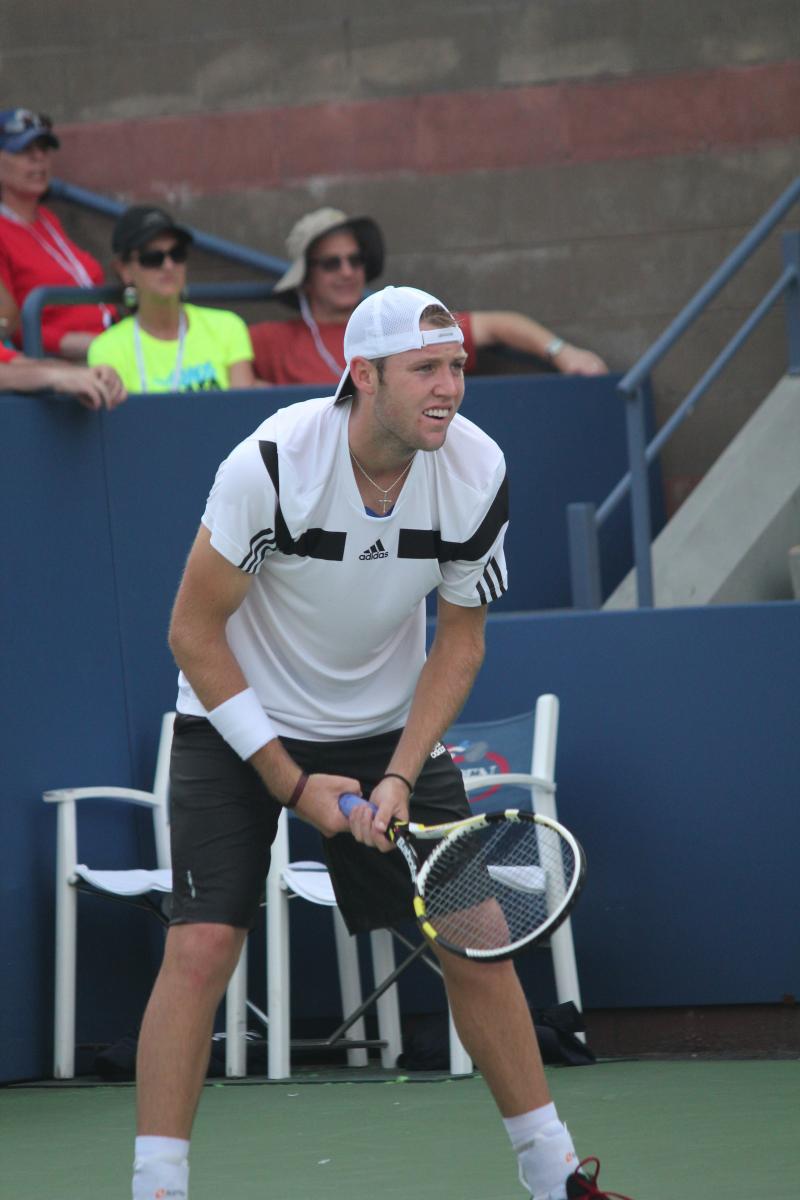 One may ask why Jack Sock or Steve Johnson is not the third favorite for Americans in this tournament. Johnson probably has the better grass court game, with a funky, junky backhand slice that would bump through the back of the court more so than bounce. His competitive fight, which kept him somewhat in Sock’s vicinity in their match at Roland Garros a few weeks ago keeps things competitive on any surface he plays on. Unfortunately for him, he runs into the hard and flat-hitting Spaniard Roberto Bautista Agut in the first round. Johnson does best when he is large and in charge, but Agut’s flat, penetrating ball will not necessarily give the American a chance to control play. Johnson is at his best when he has time to go after a shot, not so much when he is on the back foot.
Jack Sock’s draw might be worse than Johnson’s. If the USC alum were to beat Bautista Agut, he’d waltz onto a third round beating against Andy Murray. It is highly unlikely that Sock would get past the second round in the first place, as he has a tricky first round matchup with a French up-and-comer followed by a second rounder against one of the dark horses of the tournament (if a top-10 player could be considered a dark horse). Pierre-Hugues Herbert is a talented young man that has a bomb of a serve. If he serves as well as he has on the big stage (given the big stage has been lower-level televised ATP events), the Frenchman will not get broken very often by Sock. If the American pulls through, he’ll have a tough task against the eighth seed Milos Raonic of Canada. It is hard to argue that nobody has a bigger one-two punch in the game of tennis, as Raonic’s missile of a serve is constantly followed up by a bullet of a forehand. When he executes, nobody, not even Djokovic or Nadal could stop the combination.
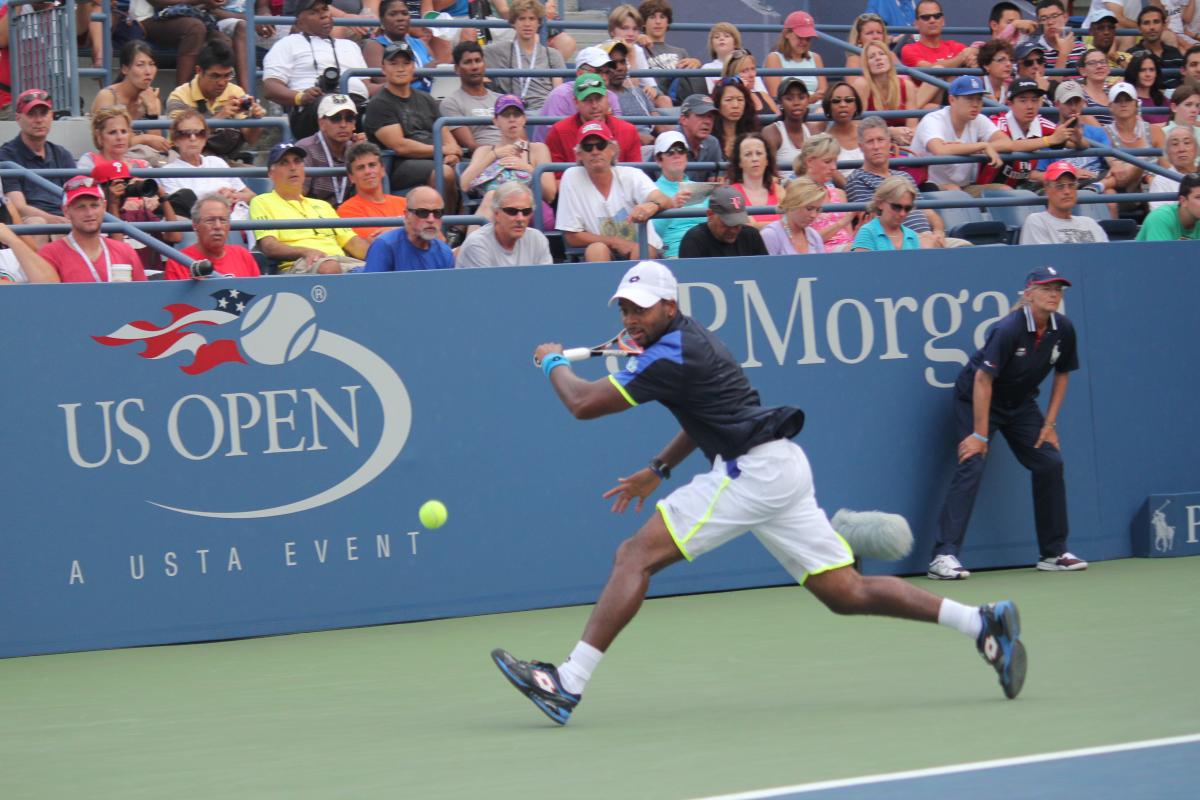 Other Americans in the draw include Donald Young, who has his once every few years resurgence with a nice couple of wins at the French Open, but it is extremely rare to see him perform at that level at two straight majors. Even if he beats the tough veteran Benjamin Becker, seeing him beat either Alexandr Dolgopolov or monster-server Samuel Groth is unlikely. Both players can play to the grass’ liking, and Young can’t, plain and simple. Alex Kuznetsov and Ryan Harrison will be outmatched and out-talented by Fabio Fognini and Grigor Dimitrov respectively, while Denis Kudla simply does not have the physical tools to trade blows with the top players in the game. Beating Marsel Ilhan, another qualifier is doable, as they actually are somewhat similar players ignoring Kudla’s superior movement, but look for Kei Nishikori to easily sweep by the American in round two.
Grigor Dimitrov will not break away from his Baby Fed nickname
So many people compare the natural talent and technique of Bulgarian Grigor Dimitrov to Roger Federer. That is for the casual fan, not for the tennis eye. As much as some of the strokes do look like Federer’s, they’re the Triple-A to Roger’s Major League. Dimitrov hits the ball a little bit more across his body, inhibiting the spin that Federer so easily gets, which against the big names in the game will come back to haunt him. He also has a barely noticeable hitch in his service motion which brings up the question of how repeatable his serve is. If the body has excess movements rather than one smooth and continuous motion, it is harder to keep the toss in place and harder to pinpoint a location in the service box, including mixing up the serve with varying spins and speeds. Don’t take this the wrong way, Dimitrov is a very good tennis player with a lot of talent, but doesn’t quite have the game that has made Federer who he is today.
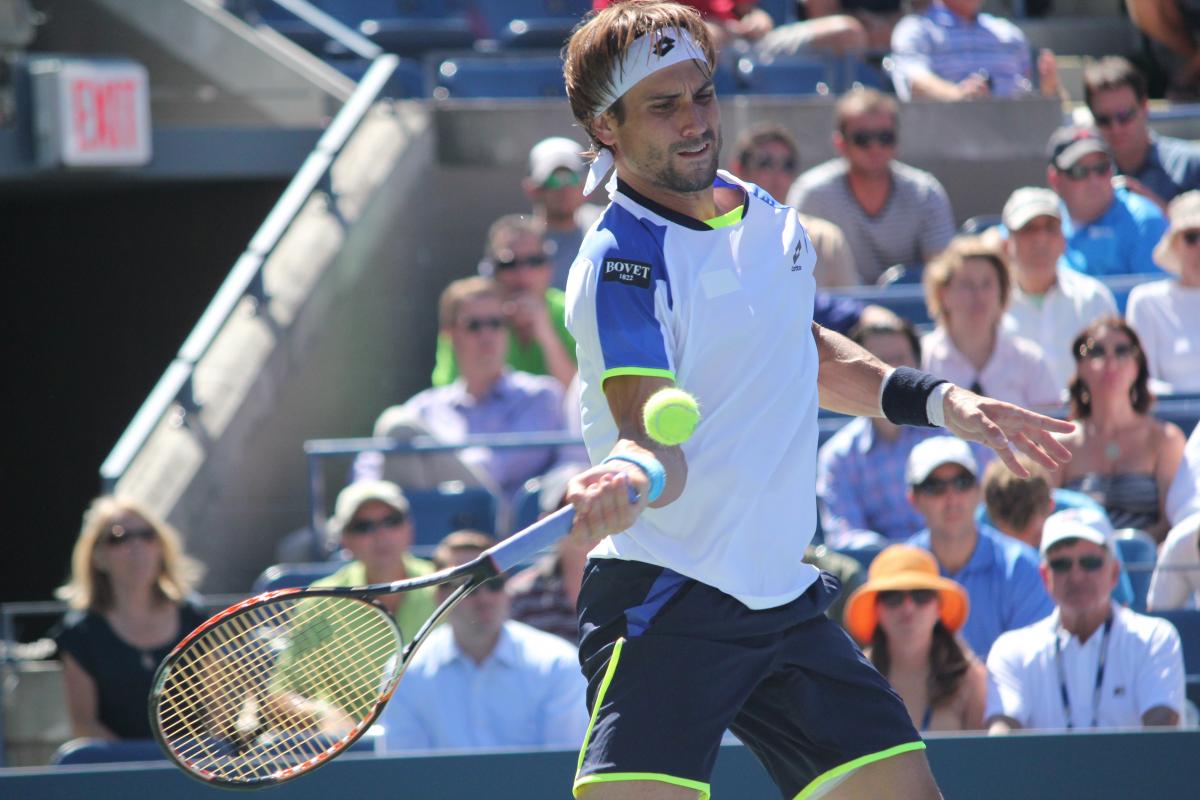 Those small differences are what Spaniard David Ferrer will pick apart in the duo’s fourth round encounter. Ferrer is the steadiest, quickest player on tour, and there is nobody besides arguably Nadal who will compete harder than the man known for his hard-working grunt. Dimitrov will need to constantly attack, and find a way not to get frustrated when the only man that can cause extended points on the surface known for its short ones does just that. Ferrer will feed back ball after ball until Dimitrov makes a mistake, at which point he will be glad to step in and control the proceedings himself. This could be a popcorn match, but everytime somebody predicts a similar match to go in the way of Ferrer’s opponent, he proves them wrong. That will not happen in this preview.
Dimitrov must be weary of what will most likely be a second round encounter with Austrian Domonic Thiem. Though unknown to many, Thiem is one of the best up-and-coming ball strikers in the game, with no true gaps in his game. Thiem is not afraid to take the ball up the line, and may even have a better one-handed backhand than Dimitrov. The Austrian’s lack of grass experience may get Dimitrov through in this one, but Thiem is extremely dangerous.
 Who Will Win?
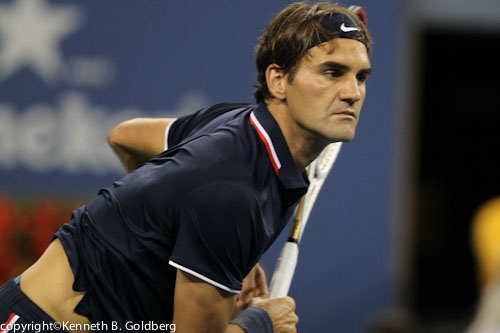
Roger Federer will be the 2014 Wimbledon champion after Rafael Nadal gets bounced before their blockbuster semifinal matchup. It is hard to see the greatest of all time winning a hard court major over the likes of Djokovic and Murray while he certainly has no chance at the French Open while Nadal is still playing. In the entire draw, the only one that can beat Federer at his best on grass is Nadal because of the well-known contrast in styles that gives the Spaniard a huge advantage. Federer’s craft is tailor-made for the Wimbledon grass and his serve is one of the most underrated shots on the entire tour.
With a quarter in which the most worrisome matchup comes in the second round, Federer should have no problem reaching the semifinals. Gilles Muller is a giant-killer at majors, but is often injured, while Julien Benneteau always gives Federer a problem for whatever reason that may be. It is hard to see Roger losing focus in that one, which he should come through. The next troublesome match will come in the fourth round if Jerzy Janowicz should make it. With the shaky year that he has been having, getting past Lleyton Hewitt in the second round is a toss up, and even if he made it, he mentally is not tough enough to take three out of five sets from Federer. It is hard to see his comrade Wawrinka learning how to play on grass in time to beat him in his cat-and-mouse games on this surface, although the matchup may favor the Australian Open champion elsewhere. The stage is set for a rematch of the 2008 final between Nadal and Federer in the semis, but again, Nadal getting there just might not be in the cards.
If Federer should get there, the final may be a matter of will to win or even just a good matchup. The Swiss Maestro has beaten Novak Djokovic, the favorite on the other half of the draw two out of three times this season, while defending champion Andy Murray will still be settling in with new coach Amelie Mauresmo. He has had very little success since last year’s title, and it is hard to see him getting through that half.
A couple of darkhorses to look out for include South African Kevin Anderson and the loose cannon of all loose cannons, Ernests Gulbis. Anderson is one of the most consistent players on tour, using his huge kick serve and solid forehand to take him to third or fourth round appearances at Grand Slams over and over again, With the year Andy Murray has been having, reaching a grand total of zero finals, it is hard to tell what Wimbledon will get out of him this year. Although he is a fantastic returner, a Kevin Anderson serving well is a Kevin Anderson holding, regardless of the opponent. If Murray is not on top of his game, that is a problem matchup for the Scot. If Anderson should win, playing David Ferrer, who always is a tough ask will be a massive battle, but it is hard to know what would happen if a big server holds serve. Tiebreakers at the end of the day are somewhat unpredictable on grass, and Anderson may very well take advantage. Look for Ferrer to come through that entire quarter, but don’t rule out the dark horse.
Big mouth, big game, big opportunity. All three represent Ernests Gulbis. As he showed at the French Open, he can bring a level to the tennis court that few others in the world can, as he beat the great Roger Federer; not an easy task. After dominating Czech Tomas Berdych in France less than a month ago, why not do it again in the round of 16 at Wimbledon? Beating Djokovic would be a career-propelling win for the Latvian, as it would show the world that his Roland Garros run wasn’t luck, and that he actually wants to be at the top of the game, since his desire is questionable to say the least. Look for a fourth round appearance against Djokovic, but beating the No. 1 seed will more than likely be too much.
The Women’s Draw
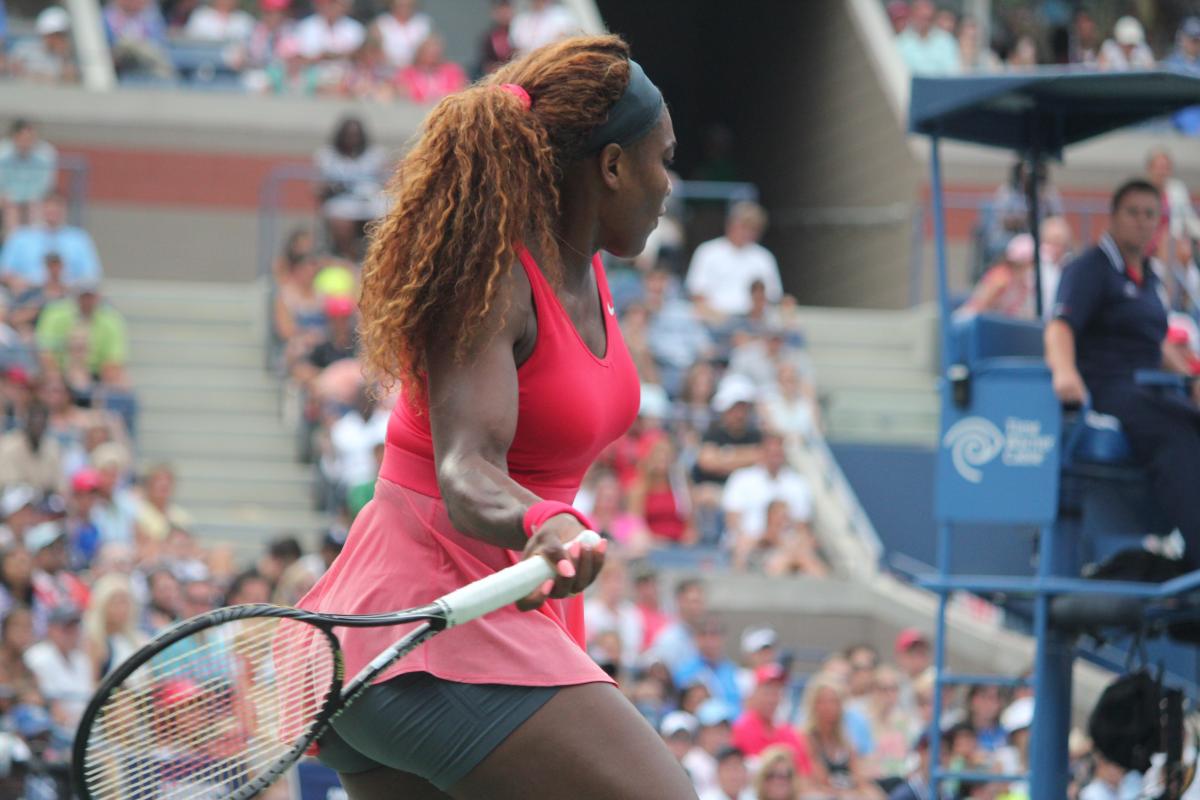 Getting straight to the point, at this stage of her career, Serena Williams will be the favorite in every tournament she plays. As long as the younger of the two Williams sisters is not hurt or half asleep, she just is simply better than everybody else by leaps and bounds. In men’s tennis, there are quite a few players that can hit the same weight of ball, while being distinguished by their movement and mental capabilities. In the women’s game, there is just nobody out there who is capable of hitting a ball with the same pace and spin as Serena.
It is easy to comb through a draw and note the dark horses and the players who have a legitimate shot at challenging for a major title, but all of this would only mean something if Serena Williams does not bring her “A” game. At her best, regardless of draw toughness, Serena will blast and grunt her way through.
This year’s Championships at Wimbledon features one of the toughest quarters in recent memory. It is arguable that three of the top five players on the planet right now are in Serena’s quarter, and having the always-feisty Angelique Kerber in the section adds to the fun. Maria Sharapova at her best is probably the only female player in the world that can match the pace of Serena’s ball, but the natural spin to create a pattern of play is missing, and the service rhythm is borderline abysmal. Between the superior returning skills of Serena, the easily-attackable second serve of Sharapova and the speed of the Wimbledon grass, a quarterfinal matchup between those two would be a lot of the unnecessarily-grunting Maria running around as Serena stands in the middle of the court hammering away. People will make a big deal about a match ten years ago between the two in which Sharapova took the Wimbledon crown from Serena but folks, that was ten years ago. Serena is a better mover and overall ball striker today while Maria has a mental block against the all-time great now that she isn’t a young talent that didn’t know any better. Serena has also been cranky with the media lately, which usually is not good for opponents. Don’t expect that quarterfinal to go past two sets.
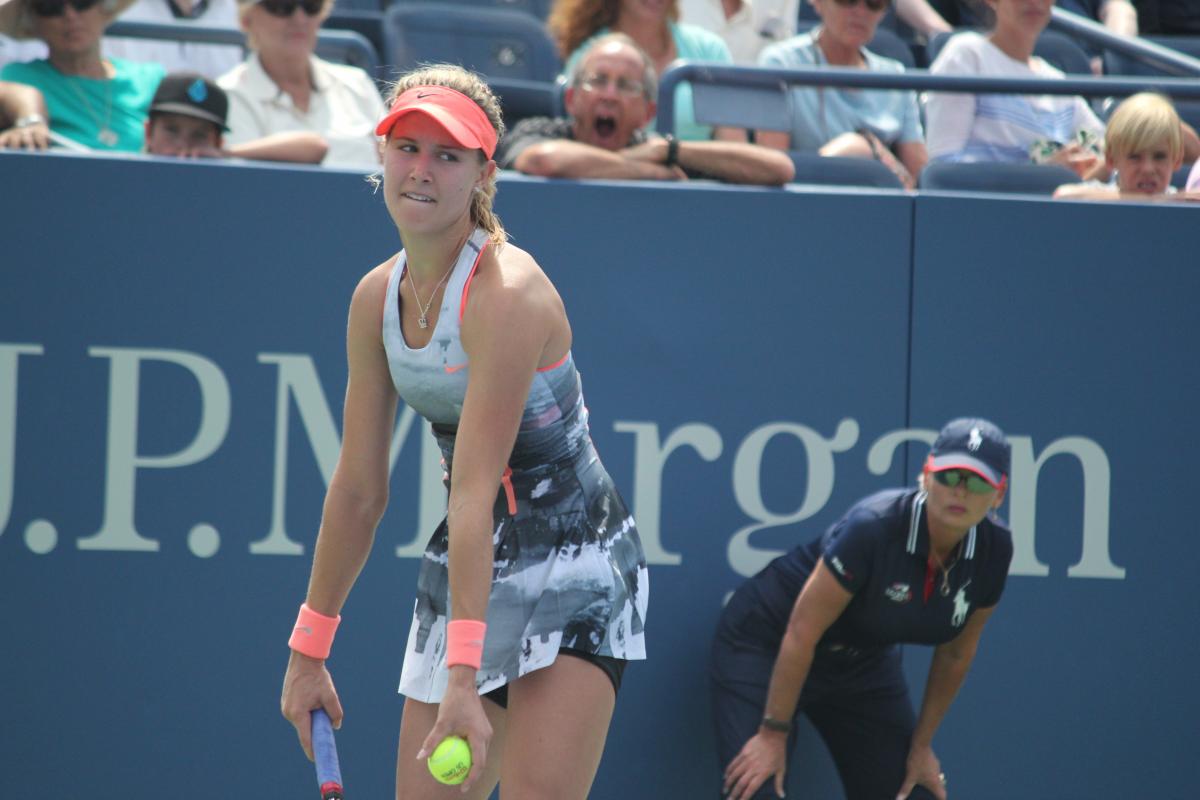 The more dangerous matchup for Serena is Canadian sensation Eugenie Bouchard. If the young star should get by German dancing star Andrea Petkovic in the third round, a youth versus greatness showdown would be in the works. For whatever reason, young people do not fear, and Bouchard not only doesn’t do that, but she never gives up. It takes a talent to reach a semifinal at a Grand Slam, yet Bouchard has done it twice this season at an astonishingly young 20 years of age, with the first of the two being at 19. It is kind of weird considering she has no pure weapon, but Bouchard has top-5 material groundstrokes overall. Both wings are extremely solid, and it’ll be interesting to see how she handles the natural extension to the net on the grass. If she can make passing shots difficult, she should be okay. Again, this is another “dark horse” that cannot beat Serena if she plays her game, even at 90 percent of her top level.
The match of the first round for which popcorn is a necessity will be Kim Clisters’ buddy Kirsten Flipkens and grass-court specialist Tamira Paszek. Yes, there is a tennis player in today’s age who does well on the grass and absolutely nowhere else. Paszek hits junky slices and mixes things up (way too much for any other surface), while Flipkens does the same exact thing, but can play “normal” tennis on other surfaces. Guinness should probably show up to this one to record a world record for slowest average groundstrokes in a tournament match and most slices in a match. Throw Roberta Vinci and the ageless Kimiko Date Krumm in there and the poor tennis balls might be worn out quicker than a men’s ball, because of all the spin put on the felt.
Overall, here are a few things to look out for on the ladies side:
►An American will beat Jelena Jankovic in the third round
Two of the bright spots for the future of American tennis have found themselves in the same 1/64th of the Wimbledon draw this year. Madison Keys, perhaps the strongest American ball striker behind Serena herself will possibly play heavily criticized lefty Taylor Townsend in a second round matchup. Although Sloane Stephens gets a lot of the spotlight for her deep forays in Grand Slams, Keys, 19, and Townsend, 18, may potentially have games just as fit to claim the title of, “the next big thing.” Keys has power not to be believed, along with the capability to control points about pretty much anybody. Townsend, who was the No.1 junior in the world has been under fire for weight concerns, but is extremely crafty and has a strong mental game, which she showed in closing the door on Alize Cornet in the second round at the French Open. If Keys stays on top of the baseline and takes the ball early, the speed of the grass will eliminate Townsend, and give her a good chance to grab a match with Jankovic by the horns. Jankovic will not win that one, Keys would be the loser.
 ►Seeds 20 or lower will not make a repeat appearance to the semifinals
First of all, the chances of Serena Williams, Maria Sharapova and Victoria Azarenka all being out before the quarterfinals is extremely small. Sharapova just won arguably the biggest title of her career at the French Open, she will not be out in the second round again. Once a year, it is expected that a favorite will go out early, but to have the three best players in the world, regardless of their ranking, out just as the courts turn from grass to dirt is a little bit out of the question. Sure, anything can happen, but something gives the feeling that history will not be repeated this time around. If anything, it isn’t totally out of the question for Venus Williams, the older sister to make a run, but there just seems to be too many pieces in her draw to go through. Venus would need to beat the serial grunter and former Wimbledon champion Petra Kvitova in the third round, very possibly Sloane Stephens in the round of 16 and the No. 2 player in the world, Li Na, in the quarterfinals. Na has a bad history with Wimbledon, never really having a solid comfort level on the grass, so if there would be any shock run, expect it from that section.
►Long matches will be the story early on
Wimbledon, like any other tournament, will have an early upset here and there. Unlike others, it is the fastest surface out there for the players, and it will cause a lot of quick service games, even for the women. Look out for a bunch of matches early on that come down to a third set, where the two opponents just try to hold on to serve until they realize that there will be no tiebreaker. A 12-10 in the third scoreline isn’t out of the question here.
Overall assessment
Serena is mad. When Serena is mad, she does bad things. When she does bad things, other players won’t be happy. Why? They won’t have a chance.