
2014 Long Island Tennis Magazine’s Coaches Roundtable Discussion
The Long Island tennis community has some of the sport’s best facilities, both indoor and outdoor, and best coaches in the world. With this wealth of talent available right in our own backyard, Long Island Tennis Magazine recently took the opportunity to pick the brains of some of these top coaches. What you will find below are some of the sport’s top instructors sharing their ideas and strategies from coaching those new to the game to skilled juniors, the state of tennis on Long Island, the role of the parent in a player’s development, and much more. Even the best coach can always learn an extra tip or two, and the following article will provide all players and coaches with a chance to learn from the cream of the area’s crop.
 Meet the participants …
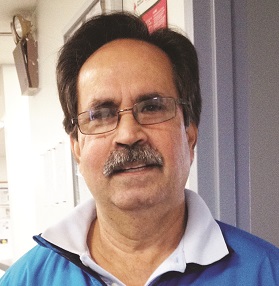
Afzal Ali
Deer Park Tennis & Fitness
Afzal Ali is director of Deer Park Tennis & Fitness and comes from a famous tennis family in India. He has been teaching tennis for 30 years and has produced many top players such as, Leander Paes and Zeeshan Ali, as well as many top juniors from Long Island. Afzal has had the privilege to work under Harry Hopman and Dennis Van Der Meer.
 Howie Arons
Great Neck Estates Tennis Center
Howie Arons is the owner/director of Great Neck Estates Tennis Center as well as the Boys Tennis Coach of BN Cardozo High School in Bayside, N.Y. Howie has coached Cardozo for 36 years, and has the most tennis wins in New York State history with 584 wins. He was USTA Coach of the Year in 1988 and USPTA Coach of the Year in 2007.
 Carl Barnett
Glen Head Racquet Club, Home of the Early Hit Training Center
This is the 12th season of Carl Barnett’s Early Hit Training Center at Glen Head Racquet Club. Early Hit is dedicated to providing lessons, groups and training in its comprehensive ALPS program. Pat Etcheberry has worked with Carl as an advisor with the ALPS training program. Carl has concluded that students learn faster when they have core fitness, flexibility and explosive strength. Early Hit not only serves juniors as the program features nationally-ranked players in the USTA Open, 40s, 60s and 70s divisions.
 Ricky Becker
JuniorTennisConsulting LLC
Ricky Becker is the founder of JuniorTennisConsulting LLC, director of tennis at Pine Hollow Country Club and independently coaches high-performance juniors year-round. Ricky was named the Most Valuable Player for the 1996 NCAA Championship Stanford Tennis Team and was a top-five nationally-ranked junior.
 Ron D'Alessandro
Carefree Racquet Club
Ron D'Alessandro is the head pro and director of tennis at Carefree Racquet Club. Ron has more than 20 years of teaching experience, and is USPTA/USPTR Certified, specializing in teaching Cardio Tennis.
 Jay Harris
Sportime
Jay Harris is the regional manager of Sportime Syosset and Bethpage. Jay was the head men’s coach at Brown University for eight years prior to moving to New York. He left Brown in 2010 as the most successful coach in the 100-plus year history of that school’s program, having led the team to its highest national ranking ever (33), to two straight Ivy League Titles, and to seven consecutive NCAA Tournament appearances. In 2005, Harris was named the Northeast Region Coach of the Year and was a finalist for the National Coach of the Year Award. Jay coached five singles players and 15 different doubles teams to the national rankings, including one All-American team. One of his players recently advanced to his second consecutive Wimbledon quarterfinal appearance, having been ranked in the top 50 on the ATP Tour. Before Brown, Harris coached at Bowling Green State University, where one of his players was Sportime’s own Regional Director of Tennis Mike Kossoff. At Bowling Green, Harris was named the 2002 Mid-American Conference Coach of the Year after leading his squad to MAC Titles in 2000 and 2002. A former successful collegiate player at the University of Cincinnati, Jay moved to Miami University where he was an assistant women’s tennis coach, while earning his master’s degree in 1996 with a concentration in sports psychology. In addition to coaching many of the nation’s top tennis players, Jay has also worked with many athletes as a Peak Performance Consultant to enhance psychological skills, such as visual imagery, anxiety regulation, self-talk and goal-setting.
 Steve Kaplan
Bethpage Park Tennis Center
Steven Kaplan is the owner of Bethpage Park Tennis Center, as well as the director of Lacoste Academy for New York City Parks Foundation. Over the last 35 years, Steve has been the long-time coach of more than 600 nationally-ranked junior players, 16 state high school champions, two NCAA Division I Singles Champions, and numerous touring professionals and prominent coaches. Steve's students have been awarded in excess of $8 million in college scholarship money.
 Whitney Kraft
USTA Billie Jean King National Tennis Center
Since 2007, Whitney Kraft has been the director of tennis at the USTA Billie Jean King National Tennis Center in Flushing, N.Y. and director of player operations for the U.S. Open. Previously, he was director of tennis for the City of Fort Lauderdale Park & Recreation Department (1998-2007). He was a 1983 Singles All-American for Florida Atlantic University, and inducted into their inaugural Athletic Hall of Fame class in 2006. He is a National 10 & Under Trainer, a USPPTA Platform Tennis instructor, as well as a member of the National Cardio Tennis Speakers Team. A USPTA member since 1983, Whitney served as district director for Broward County, Florida and as president of the local CTA, Broward Tennis Association. Whitney has been the tournament director for many prestigious events, including the National Public Parks Tennis Championships (2007), ITF World Championships (2002), the inaugural U.S. Open National Sectional Playoffs (2010), USTA Boys 14 National Clay Court Championships (2000-2007) and the USTA National Open Clay Court and Indoor Championships (1998-present).
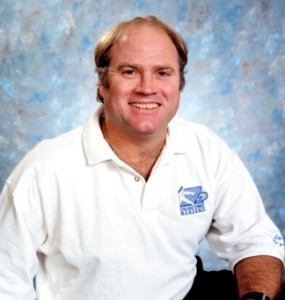 Ed Krass
College Tennis Exposure Camps
Ed Krass coached the Harvard Women’s Tennis Team to four consecutive Ivy League titles from 1986-1990. Ed is the founder and director of the Annual College Tennis Exposure Camps, which are taught exclusively by all Head College Coaches for high school-aged players (15-18). Ed is also the founder of One-On-One Doubles tournaments, which have been played at USTA, ATP, ITA and USPTA national events.
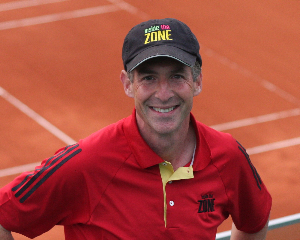 Rob Polishook, MA, CPC
Inside the Zone Sports Performance Group
Rob Polishook, MA, CPC is the founder and director of Inside the Zone Sports Performance Group. He works with athletes in all sports and levels, helping them to break through mental barriers and be their best both as a person and an athlete. Rob has spoken to athletes, coaches, and parents both nationally at USTA, USPTA and ITA conferences, and internationally in India and Israel. Additionally, he is author of Tennis Inside the Zone: Mental Training Workouts for Champions. His work was recently featured in ESPN’s latest 30 for 30 film called “Fields of Fear.” In prior years, Rob received the USPTA-Eastern Division High School Coach of the Year Award and coached USTA’s 16 and under Zonals.
 Butch Seewagen
CATS—Children's Athletic Training School/Butch Seewagen Tennis Academy
Butch Seewagen is owner of CATS—Children's Athletic Training School and Butch Seewagen Tennis Academy in Rockville Centre, N.Y. He is a former U.S. Amateur Champion, coach of Ivy League Champion Columbia University, and a top 70 in the world competitor, having played the U.S. Open 13X reaching the semifinals of doubles and was among the last 32 in singles.
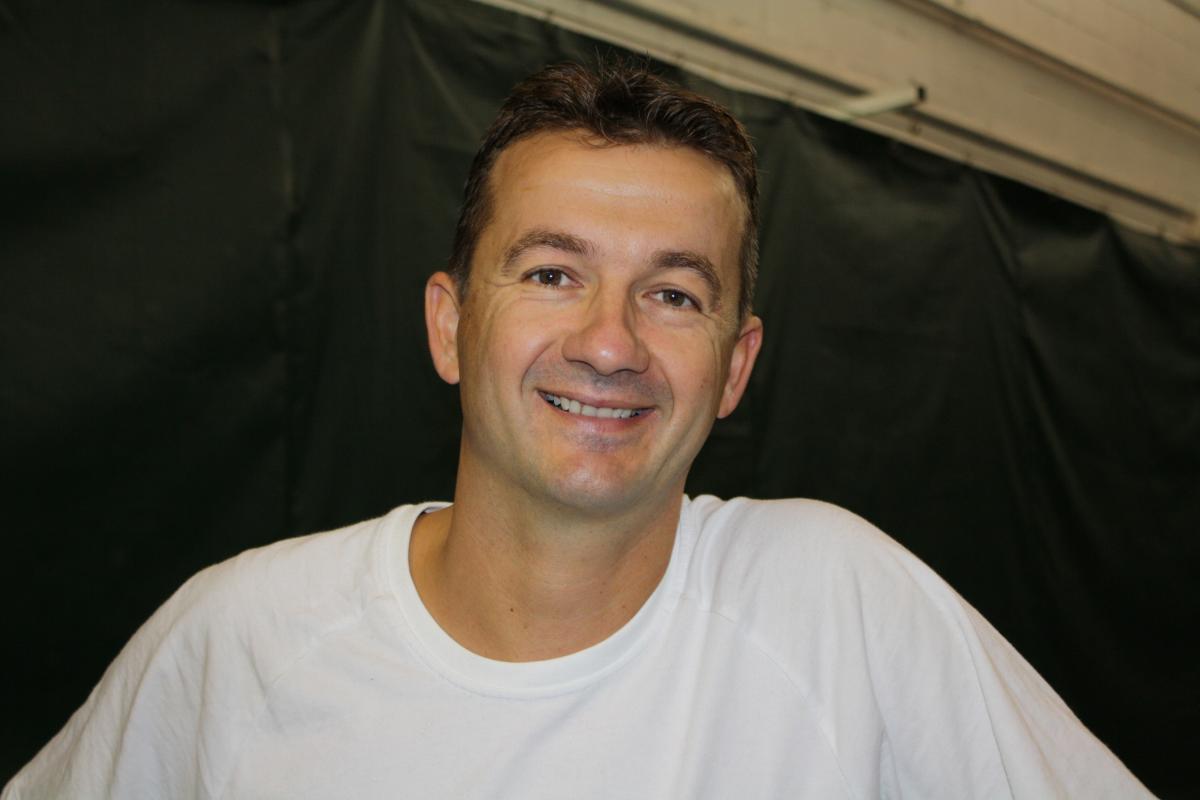 Tonny van de Pieterman
Point Set Tennis
Tonny van de Pieterman is director of tennis operations for Point Set Tennis. He has been at Point Set for three years and is the coordinator of Point Set’s flagship competitive junior program, TTP. He has been coaching top juniors and adult players alike on Long Island’s south shore for the past 10 years. Previously, he coached at the famous Harry Hopman Tennis Academy in Saddlebrook, Fla. before taking residence in Long Beach, N.Y.
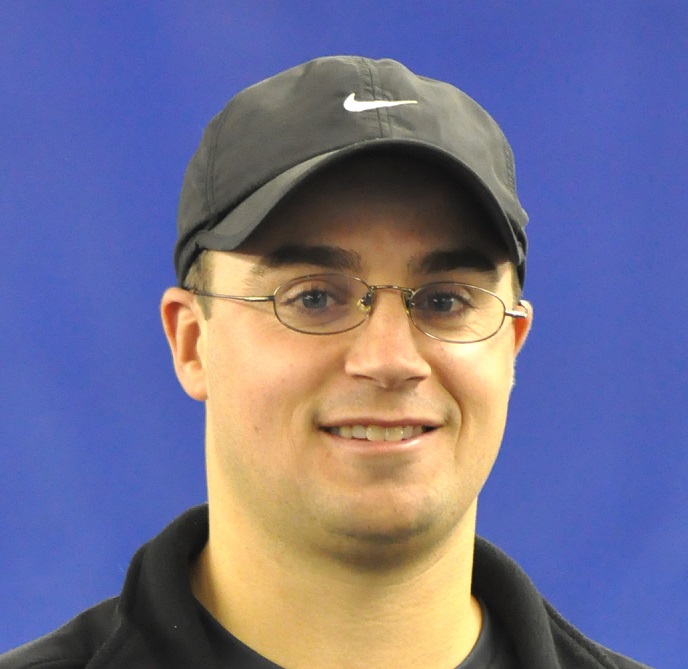 Jay Wass
Sportime Kings Park
Jason Wass is a USPTA Professional Certified Instructor, with experience coaching all ages and levels. A graduate of the USTA High Performance Player Development program, Jay’s strengths lie in working with players in developmental stages of the game, building player’s technique and strategy from the ground up. Jason’s versatility as a tennis coach is demonstrated by his list of students that range from total beginner to nationally-ranked. Named the 2010 USTA Long Island Tennis Professional of the Year, Jay is the director of tennis at Sportime Kings Park.
What are the biggest positives and negatives about the current state of tennis on Long Island and how can we continue to grow participation in the sport?
Afzal Ali: To grow tennis participation on Long Island, we have to make private and group lessons more affordable. Every three months or so, the Island’s tennis clubs should give a free clinic to non-club members, only for an hour or two, and the general public will appreciate it.
Howie Arons: Tennis is absolutely growing on Long Island. As an owner and director of a tennis club, our growth continues to improve. With the addition of 10 & Under initiatives throughout Long Island, many new families are experiencing the sport of tennis. Many juniors are playing middle school, junior varsity and high school tennis as well. This becomes a great base for private tennis clubs to focus on. Scholastic tennis, in my opinion, is the way to grow the game. Having a goal of playing varsity tennis will grow our game among junior players. When I hear some coaches tell their players to simply come to their program and skip the high school experience, it saddens me because these coaches simply don’t get it. Playing high school tennis is fun, it builds friendships that last a lifetime, and it truly makes juniors love tennis even more.
Businesses and organizations should take advantage of Long Island Tennis Magazine as I do. They have the largest voice in the tennis world on Long Island, and we as businesses and organizations should not take for granted how their expos, events and publication can help us all grow participation.
Ricky Becker: I think the biggest positive is that there are more good coaches coming to the Long Island area than leaving the area. It's great for everyone. I think the biggest negative though is that too many people now have multiple coaches, which limits player development.
Steven Kaplan: I'm cautiously optimistic about the state of tennis on Long Island. On the positive side, tennis is ingrained in Long Island culture, as people love and appreciate the value of the sport. Tennis is a part of the overall educational experience for many children and a strong core of adults see the health and fitness benefits. We have a high concentration of facilities, top programs and dedicated players.
The spotlight of the tennis universe is nearby at the U.S. Open for two weeks every year, and that is an incredible opportunity for Long Islanders. Long Island Tennis Magazine and New York Tennis Magazine have presented the New York Tennis Expo with an unprecedented attendance for two consecutive years now, and events like this helps drive increased interest in the sport.
QuickStart programs are giving very young players the chance to see tennis as fun at an early age, and that is important for the sport to grow.
On the negative side, the economic crunch has impacted tennis participation on much of Long Island. Unemployment, rising healthcare costs and ridiculously inflated college tuition costs, have reduced Long Islander's discretionary incomes. While many indoor facilities deliver great value with top programs, operational costs are rising quickly. It's a challenging economy for everyone. New York City has extensive programs like City Parks Foundation and NYJTL, which address the need to create opportunities for players based first, on economic need.
Many Long Island clubs provide scholarships to players based primarily on ability as a marketing tool. This is terrific for the players and their families, but it shifts resources more than it creates needed new opportunities to grow the game.
Jason Wass: Long Island has amazing tennis pros, talented young athletes and a wealth of resources. These are the some of the biggest positives about Long Island tennis and why I believe that we get our players off to such a great start in this game. However, heightened competition can lead to greater burnout, and the cold weather months means less accessible court time, which can derail players from being on-court as much as they would normally want to.
Long Island Tennis Magazine has brought a new level of excitement to the Long Island tennis community. They have shined a light on many of the great programs and stories that before, would have gone untold or unseen.
What qualities would you look for in the person chosen as the USTA’s new head of player development, and is there a specific candidate you have in mind?
Ricky Becker: Without knowing people’s specific philosophies on how to develop a whole nation of tennis players, it is difficult to endorse a specific person. The major quality I would look for in the candidate is someone who can cede control, and convince the USTA board that it’s okay, and not insist that the USTA only provide funding if the USTA is the “team leader.”
Steven Kaplan: The new head of USTA player development has a daunting task ahead of them as the current state of U.S. tennis is not great. Clearly, the system needs to progress and the new director will need several important qualities. First, they will need the courage to stand up to the current system’s politics to lead change. Next, they will need the vision to champion progress and innovation. They will need to be independent thinkers, well-acquainted with tennis in this country, as well as with worldwide practices. A strong playing background will provide a keen understanding of what it takes to succeed and will give the new director both insight and credibility. They will need to be dedicated, hard-working and non-elitist. Finally, they will need to be an inspirational leader who is fully committed to the job. Two potential former tennis greats come to mind. Both of these potential candidates are intelligent, independent and articulate, and have exhibited the qualities that the job requires. Martina Navratatilova and Jim Courier would both be great choices.
Butch Seewagen: There is no doubt that there is much to do and improve upon for the next head of USTA player development. Like everyone else, I am disappointed by the lack of success the U.S. has had over the last few years. One problem has been a lack of communication and sharing of ideas with past players and elite coaches. The new director must have strong organizational skills and be willing to be more communicative with other tennis experts to come up with a new agenda. Rather than having one director, each of the 17 USTA Sections should have a head of development. These Sectional heads should be willing to reach out to the best tennis minds in their area to come up with suggestions for the national director to be implemented locally and evaluated for possible national expansion. These sectional leaders should meet periodically with the national director for an idea sharing summit. No one person has all the answers. I would venture to bet success will come from an idea from a new source that, up to now, has not been asked.
The challenge I have for the new USTA director of player development is how to improve regional levels of competition so that top players do not have to leave home to go to an academy for better competition. I personally believe that the local level of coaching is equal and, at times, superior to the national academies. I am sure I am one of many who would be willing to give suggestions, if only there was someone who asked.
The person I would recommend for the position of national head of player development is Howard Endelman of Columbia University.
Jason Wass: Personally, I think that whomever is selected head USTA player development should be focused on player and program development, rather than be focused on the highest level players. Top coaches can be hired to work with top players, but the position, in my opinion will require someone who understands player development on a more overall stage and at a younger age.
Is there a difference between coaching girls and boys?
Carl Barnett: Boys need and want to be pushed. You should know where their buttons are, but don't go overboard. The need for "less is more" is common. Girls are more mindful and present in practice. With girls, confirm often when finding new techniques and only raise your voice in praise. Girls are no doubt some of my toughest players, but an even voice providing lots of support to their efforts is what I have found works best.
Ron D'Alessandro: For me, there is relatively no difference. I feel that I need to find a connection with the student, whether a boy or girl, and try to understand how they tick. What I mean by this is you must determine their skill assets, their mental capabilities, and their level of focus. The pro in certain respects needs to adjust to the student, as much as the student needs to listen to the pro. The biggest difference for me is generally whether they want to tell you about One Direction or how lousy the Jets are playing.
Ed Krass: I think it is a good idea to tell the girls a few things they are doing well, before telling them what they are doing "wrong.” This may hold true with some boys, as well. I have found the direct approach works better with the boys, but not all the time. Each person is different, so your approach to coaching men and women should differ a bit. The women should both like their coach and respect their coach. The men need to mainly respect their coach and can actually not like their coach and still produce winning results. I've seen plenty of this type of scenario over the years!
At what age level, if any, does home schooling become necessary for the serious tennis player?
Ricky Becker: If a serious player is considered to be a Division I caliber level or lower, it is absolutely not necessary. If someone wants to put all their eggs in one basket and try to be a legitimate pro player, I do think the younger the child is home-schooled, the better it is for them.
Rob Polishook: There is not a one-size-fits-all answer for this question. It’s based on the personal development of the player. Recent studies in both the men’s and woman’s game has shown that the top players now are older than in previous years. Hopefully, this will put the focus back on the players’ individual process and eliminate time constraints. All kids are different and may thrive in different settings. Homeschooling is an option to develop a serious tennis player, however there are other options.
Tonny van de Pieterman: I would strongly advise against any homeschooling for junior tennis players. A successful tennis player is a great manager of time and problem solver, and should be able to combine both school and tennis training. Perhaps if a junior shows great success at the age of 15, nationally and internationally, a decision based on the chance of a professional career would make an exception to my advice.
If a player is lacking confidence, what is the best thing to do on court to get them to relax and gain their confidence back again?
Howie Arons: As a high school coach for the past 36 years, I have had numerous occasions to help players regain their confidence and a positive attitude. When able to coach on-court during a match, I try to get my player to simply not get too far ahead of himself. If he is losing big, I would get the player to not think about the match or losing. Just win the next point and the next game. Seriously, every good tennis player knows that one game can turn a whole match around. Think in the moment, do not think of winning or losing … just focus on the next point.
At Boys 14s Zonals about 10 years ago, I was coaching an ETA player who was down 6-1, 5-0. At the change, he said, “Sorry coach, I suck.” I said to him, “Just win this next game and you will put pressure on your opponent to close the match.” He won that game and won the match 6-1 in the third. Never judge yourself during the match, focus on the next point, as it may be the difference.
Rob Polishook: The key is to slow things down and shift the focus to what the player can control. This might be their breathing, strategy and staying positive. Confidence is a process that begins when a player focuses on what they can control. When a player focuses on what they can control, they will be more inclined to relax, be in control, and play their game.
Tonny van de Pieterman: Tournament players can lose their confidence if their expectations are not met. As a coach, I try and keep the big picture in mind. The players will lose this sometimes because of all the emotions that match play will bring up as a result. If I can help my players focus on the things they can control, they will soon relax and rebuild their confidence.
Do you think tennis players should take an offseason to rest?
Afzal Ali: No, the reason for taking time off during the offseason is to rest, but a tennis player must always be "match-ready.” Professional tennis players will lose the feel of the ball, timing and pressure shots on the run if they have too much down-time. The tennis player should take a week or two and train their body; core, legs and upper body strength, as well as yoga for mental training and flexibility.
Jay Harris: This is a question that I have heard asked for years. And I just don’t get it. The stars of the tennis tour need an offseason? Aren’t they able to make their own schedule to suit their own needs with no worry of pre-season training camps to report to or making team meetings during the season on time so that the guys at ESPN don’t spend days and days making fun of them for the devastation they are causing to their teams and cities? Can’t these tennis players essentially schedule vacations at any time in between the 14-20 tournament weeks that they play in a year? Doesn’t that give them at least 32 weeks a year to find time for their very own “off-season?”
Now don’t get me wrong … playing tennis on the Pro Tour can be grueling. Traveling all over the world, making last minute reservations and jumping in and out of planes, and waking up in random cities from Tashkent, Uzbekistan to Springfield, Ill. can leave one a little confused when trying to figure out what continent they just woke up in. But that is not who this question usually targeted for. Instead of worrying about these top players needing an offseason, let’s worry about the depth of this sport! Let’s worry about the players who may actually need an offseason just to survive and let’s figure out how to share the wealth a little more so they don’t have to kill themselves all year long! Former Brown University player and top 50 ATP player (yes they play tennis in the Ivy league too!), Jamie Cerretani, once played 45 tournaments in a year! Yes that’s right … 45 tournaments! There are 52 weeks in a year. So he was off for seven of them? Well, not exactly. He had to also play for a German professional club team to make enough money to travel. Jamie, a Boston native, actually didn’t even venture back into the states for a two-and-a-half-year span while he worked his way up to the main ATP draws.
Let’s find a way to help these types of players because there are some pretty darn good ones out there just trying to survive long enough to make a splash! By the way, I’m proud to say that Jamie made his splash by advancing to the quarterfinals of Wimbledon two years in a row!
Steven Kaplan: Although tennis players don't need an offseason to rest, they can phase their training routines to optimize skill improvement, injury avoidance and peak performance. While a focus on self-awareness is necessary for maximum improvement on the practice court, it is a poor mindset for great competitive performances which require a relaxed mindset. Players should consider taking periodic competitive tournament breaks to prioritize on and off the court progress without the limitations of tournaments preparation. Of course, it's not easy to convince an ambitious young player to take a rest from accumulating ranking points, but in any career, there's a time to build achievement wealth and a time to invest in skill equity.
How important is a physical size advantage on the junior and pro levels?
Afzal Ali: At the junior level, it doesn't matter that much, but physical size is significant because movement, reach, power and skill plays a very big role at the professional level.
Steven Kaplan: One of the wonderful things about tennis is that the heart and head of a player can be so strong that they can overcome physical disadvantages and achieve greatness. This uphill battle against nature is getting more difficult in the modern game however. Tennis, like any sport, has body types that are favorable for excellence. As the sport becomes more about explosive power, long lean frames often have an edge. The average height of the top 100 men on the professional tour has increased about an amazing 1.5 inches in the last five years to almost 6 feet, 2 inches. The top 100 women have seen similar increases to a current average of 5 foot, 10 inches. The average weight of the top men and women have also increased as well, likely as the result of the need for developing greater muscle mass. Since tennis is also about power endurance, shorter compactly built athletes also achieve top levels, but clearly, in pro tennis, size matters. Greater size, strength as well as physical maturity are also important in juniors, but these advantages are often very fluid since children's bodies can develop rapidly.
Whitney Kraft: Having a size advantage is beneficial at certain ages of in the junior ranks, and disadvantageous at other times if an awkward growth spurt accompanies the size increase as it takes time for youth players to adjust. At the pro level, it becomes more evident as people like Marin Cilic demonstrated at this year’s U.S. Open, combining both his height/strength to dominate his service games and nimble movement to gain his first U.S. Open and Grand Slam title.
Who are the greatest players of all-time on each surface?
Carl Barnett: On clay, it would have to be Rafael Nadal. On hard courts, I would say Roger Federer, and on grass, I would say Pete Sampras.
Jay Harris: On clay, most today would think this is a slam dunk question and would immediately anoint Rafael Nadal as the greatest clay courter ever, having won seven French Open Championships in seven trips to the finals. But let's not forget Bjorn Borg. He won six French Opens in six trips to the finals, and we will never know how many more he would have won had he not retired at the age of 26. He was 49-2 at the French Open, and at one point, actually won 41 straight sets on the red clay—not even Rafa has done that. But two facts remain; Borg did retire early, and Rafa still has more years to come. Nadal is now 52-1 at the French and also essentially dominates every other clay court event as well.
On grass, many will be quick to choose the easy route and go with Roger Federer, but we have to dig a little deeper and make sure that we look on the women's side here for the greatest grass court performers, and there we will find a great debate. Martina Navratilova and her record nine Wimbledon Titles is impressive, but what may be more impressive are Steffi Graf's seven titles in nine years over the likes of Navratilova, Chris Evert and Monica Seles. Having said that, I have to go with my heart and still pick Pete Sampras and his seven titles and 57-1 record in a nine-year span as the greatest grass court player ever.
On hard courts, if you ask me who is most fun to watch on the hard courts, I would have to go with John McEnroe and Jimmy Connors. But looking at the overall results, I have to give it to Roger Federer. He has won nine Grand Slam titles on hard courts and has dominated many summers of hard court tennis.
How important do you think it is for a junior to participate in doubles as well as singles?
Afzal Ali: Absolutely! It is very important for juniors to participate in doubles. It teaches them to move forward and develop their angles, return of serve, volleys and overheads, which many juniors lack.
Jay Harris: It is a common thought that our American players do not play enough doubles. I personally feel that not only is consistent doubles exposure and training important to develop doubles skills, but also that these doubles skills are highly important in the overall development of a singles player.
Many players have earned their way on a college team based on their doubles ability. I have had three of my Brown graduates earn their way on the professional tour via doubles success, and I had plenty of doubles successes with teams at Brown, so I may be a little biased, but I am of course not in the minority when it comes to preaching about the importance of doubles.
But what is being done about it? Are there junior coaches out there truly maintaining a consistent level of doubles skill training? It is all good for our junior players to be playing more doubles in tournaments than possibly they have in the recent past, but the training is where a majority of the true progression is going to take place. If players only really play doubles in tournaments, then they are really just becoming singles players playing doubles in tournaments.
It isn’t hard for college coaches to see who has trained to develop doubles and attacking skills. Those players who do it will undoubtedly keep finding ways on to great college teams, and I truly believe that those players will also be set up to produce the all-important word: Potential.
Tonny van de Pieterman: Unfortunately, it seems there are increasingly less opportunities for juniors to play doubles. I find doubles a great addition to the overall learning path of a junior. It is so much less stressful, great practice, and it is at least a somewhat social event.
Is it better for a junior to play up or down in ability level and why?
Ron D'Alessandro: For the most part, it is always more beneficial for a junior to play up in ability level. Reasons being that when you play more skilled players, your focus level seems to increase, thus giving you the ability to raise the level of your play. If you are playing better players, you may be more inclined to take more risk by going for shots that you may not normally hit. You have to play outside your comfort zone at times in order to boost the level of your play. If the junior is just starting to compete at a lower level, I wouldn't want to always play better players. You want them to have some level of success, so that they can build confidence in their game.
Ed Krass: Juniors need to control their own level/age bracket before playing up. Championship-level college players learn how to become "pressure" players at the junior level. One feels the most pressure playing in their own age division, as they feel they have more to lose in that scenario. Whereas, playing up gives the players the feeling that they have nothing to lose, hence not enough pressure to truly develop into a champion. There are a few exceptions to this. For example, if a player wins 80 to 90 percent of their matches, all the time, in their age division, then it is a good idea to challenge them by entering them into an age level up.
Jason Wass: A simple formula for me is 25 percent of the time, play up; 25 percent of the time, play down; and 50 percent of the time, play on or about your own level. More importantly, I think that players should train with players of similar intensity levels and common goals, otherwise the level of focus and concentration can be difficult to maintain.
What is the most ignored aspect of footwork today and how could it be improved?
Carl Barnett: Core strength and foot speed. Core strength is what allows one to float as they move, and foot speed can be increased in everyone. Footwork drills on the court and the second half of resistance drills, where bungie cords make the player work at a level they are not accustomed to, are ways in which footwork can be improved.
Butch Seewagen: With the disappearance of the net game, two consequences have developed: Rarity of one-handed backhands and the closed stance. To be able to have the option to move forward quickly necessitates a closed or sideways stance. Moving forward to the net from a closed stance enables a player to get three to five steps closer to the net. Roger Federer is the most prominent player to play varying his stances from closed to open. This ability makes him the poster boy for the all-court game.
The simplest way to practice the closed stance is to catch a ball out in front of a player’s lead foot (forehand or backhand) with the non-racket hand and then put it into play with a closed or squared position. For a righty to do a one- or two-handed backhand requires the left arm to be over the right to catch the ball. Then, simply lift and hit with one or two hands as if feeding a ball to rally. By practicing putting the ball into play from a square or closed position to start every rally will make this position become natural.
Whitney Kraft: There is so much within this question … however, players learning to take and give space at appropriate times is one area, service returns for example, when to approach, etc. As well, a greater focus on feet “alertness” immediately after the serve is crucial to mitigate the deep aggressive return hit directly back at the server.
What traits must a top player possess mentally and physically to set them apart?
Carl Barnett: What I feel is essential to be instilled in teaching juniors is the importance of simplifying of their training, both mentally and physically. In addition, we must provide a systematic approach that motivates and inspires kids to achieve their desired goals. Our commitment is to "their success" and they must know it.
Rob Polishook: Mentally, top players must be able manage and release their emotion. This doesn’t mean ignoring nerves, but rather, knowing what they need to do to in order to deal with pressure and bring themselves back to a state of calm. During Novak Djokovic’s serve routine, he bounces the ball until he is calm. Only then does he begin the point.
Physically, top players must be able to play a grueling point, then recover so their heart rate is in their ideal zone. And then be able to play another grueling point. Then continue this cycle throughout the match.
Butch Seewagen: Physically, the obvious traits are speed, agility, flexibility, strength and stamina. My father, legendary Eastern Coach George Seewagen, once answered this question by pointing to his heart and stomach. A player must have the stomach for battle and the heart of a champion, a love for competition, and 100 percent effort with no excuses. The players I admire most for these qualities are Rafael Nadal and Jimmy Connors.
Mentally, the traits most important for a top player to possess is persistence and determination. When I was younger, before competing, my father always gave me two words of encouragement, “Be determined,” before stepping onto the court. My favorite quote is by Calvin Coolidge: “Nothing in the world can take the place of persistence. Talent will not; nothing is more common than unsuccessful men with talent. Genius will not; unrewarded genius is almost a proverb. Education will not; the world is full of educated derelicts. Persistence and determination alone are omnipotent.”
How can we get more people watching college tennis both live in-person and on TV?
Ricky Becker: I would focus on the in-person experience, not the TV viewership. Futile efforts to get television numbers for college tennis are ruining the experience for players and fans by changing scoring, rules, etc. What I learned from playing at Stanford and against Georgia, UCLA, USC and other big name schools is crowds begin to form when the team members recruit their friends to watch the matches, who then recruit their friends, and so-on. And if they tailgate first with food and beverages first, all the better! Before you know it, the matches have a “buzz” to them and it becomes a happening.
Jay Harris: I was a college coach for 16 years, and am now in the private sector of the tennis business, running clubs and getting involved in different community tennis programs across Long Island. From my experiences in these areas, I am just amazed at the disconnect between all three!!
I grew up with a high school basketball and football-coaching father. Do you know what I remember? I remember college coaches like Bobby Knight and Bob Huggins walking in to high school and junior high gyms all over their states. These coaches walked in to these gyms sometimes to talk to fifth and sixth graders! They weren’t there to recruit these kids of course. They were there partially because they wanted to help the youth of America, but also to create raving fans!
I loved Bobby Knight after hearing him stand up and give a speech laced with profanity to a bunch of us 13-year olds! It was awesome! (Ok, maybe not to the parents, but to a group of giggling 13 year-old boys it was! Ha) And even though I lived in Ohio, I had to root for Indiana too! How many college coaches have gone and even stepped foot on a high school campus? How many have even gone into local clubs to inspire young tennis players by directly giving them an experience by being in the presence of the head coach that player should be striving to play for one day?
Now, on the other hand, how many high school coaches even know who the college tennis coaches are in their area? They do have the Internet, right? How many of these coaches, or club pros, have invited a college coach to come and see a group of their kids practice and possibly speak to them for 15 minutes?
College tennis can change their rules and create a format that is better for TV, and then they can squeeze on TV here and there, but the only way to really make headway with this issue, is to create meaningful and lasting relationships in the communities.
At Texas A&M, for example, they sell season tickets for their home tennis matches! Can you imagine? Do you think the current coach and past coaches put some time into community relationships? Of course they did. But that’s an anomaly. We need every college coach working to create these relationships and we need loads of tennis coaches at high schools and clubs to buy into the idea that the kids they are coaching, want to play college tennis one day, and that maybe it’s a good idea to give them a glimpse of what they are apparently striving to get involved in.
Ed Krass: We can get folks to college matches if we play the matches after work, say around 6:00 p.m. or on the weekend in the afternoon. These events need to be very fan-friendly, and include music, concessions and announcers with an exciting atmosphere. The format needs to be shorter in length and not last for five hours! I like the no-ad scoring to speed up the matches and showcase more pressure points for the audience. Music could be played low throughout the matches, but certainly in the background. The racquet companies could give away a free racquet, and there could be speed serve contests at halftime, along with other contests to entice folks to participate. College matches would be cool to watch on TV if it was easy to understand and follow. All of the singles and doubles matches may be best served by showing the highlights of each match. The TV producers will need to do an excellent editing job with this part to build in a 30-minute or 60-minute show. If college tennis is seen more on TV, the game will grow fast with bigger crowds attending the college tennis matches in the future!
Jason Wass: I read an article recently that the Penn State tennis program has had hundreds more spectators at their home matches than in previous years. Whatever they are doing, it should be copied. Personally, at the collegiate level, it needs to start with the team members, their families and friends, and then move out from there. In addition, college teams interacting with local tennis programs would do a lot to increase their fan base. Young players would love to get behind collegiate athletes and the atmosphere for the matches is both energetic and fun which is a great recipe for increased fan participation.
If you had to choose one player on the pro tour to serve as a role model for your students, who would it be and why?
Howie Arons: It is very tough to choose one role model for our juniors today, because there are so many. But if I had to pick one, it would have to be Roger Federer … no doubt. He plays so hard, is not afraid to lose and respects the game and his opponents. To care so much and work this hard at this point in his career is amazing. He is a life role model, not just a tennis player. He plays for passion and love; he certainly does not need the money. The way he handles himself before, during and after a match can teach all of us about life and tennis.
Ron D'Alessandro: I would choose Novak Djokovic, and not only because he's one of the top players in the world, but because of the way he interacts with other players and the fans. You can go on YouTube and see many videos of Novak having a great time, joking around on and off the court, dancing, singing, mimicking other players, and all in good fun. It makes him a very likeable person, not only for his tennis skills, and his success as a player, but because he seems like a regular guy that most people can relate to.
Whitney Kraft: It would have to be David Ferrer. He is hard-working, steady emotionally, selfless, humble, and respectful of his opponents. For example, this year after receiving a walkover at the U.S. Open, he proceeded immediately to the practice courts to not only hit, but also work with his strength and conditioning coach, doing ball chase downs, sprints and other taxing and exasperating exercises to prepare for his next match. Impressive work ethic!