At The Net w/ Parsa Samii

Tennis is often referred to as the sport of a lifetime. Whether you are a player or a coach, tennis is a sport that can be picked up late in life, but also remains a part of one’s identity from the moment they pick up a racquet. The skills you develop, the lessons you learn, and the connections you make can often transcend the sport itself.
That’s the case for Parsa Samii, a successful licensed Real Estate Salesperson for Compass who has specialized in placing families in their dream homes on Long Island. He was raised on the North Shore and has played tennis throughout his life. After a decorated junior career, he would go on to play at the collegiate level at Amherst University in Massachusetts, where his success led him to playing professionally.
As a natural born leader with the desire to help others, when his time on the professional tour came to an end, Parsa turned to teaching. He embraced using what he had learned in his playing days and transferring it to those he worked with on court.
“For me, the coaching itself was the best part,” he says. “The deep, one-on-one work with an individual athlete. Coaching isn’t just about technique or strategy, it’s about understanding a person on multiple levels–their mindset, confidence, motivations, even what holds them back. Every player is unique, and I loved peeling back those layers to figure out what made someone tick. Helping them break through mental blocks, adapt under pressure, and trust their own game–that process was incredibly rewarding. It wasn’t just about teaching tennis, it was about helping someone grow as a competitor and as a person. That level of connection and trust is something really special, and it’s what I enjoyed most about those years.”
Parsa relished the ability to develop individuals, both as tennis players and as people. He worked with elite junior players as well as professional players, many here on Long Island but also some internationally.
And while he loved what he did, eventually, the physical toll began to make Parsa wonder if he should transition into a different career. Injuries lingered from his playing days and would only be made worse by his hours on court teaching, and it left him contemplating what was next.
“After undergoing two surgeries on my right shoulder and facing the likelihood of a third procedure on my elbow, it became clear that the physical demands of being on court eight to nine hours a day weren’t sustainable anymore,” he recalls. “I had poured so much into the sport for decades, but my body was telling me it was time to make a change. That’s when I started looking into real estate–an industry where I could still be competitive, solve problems and work closely with people.”
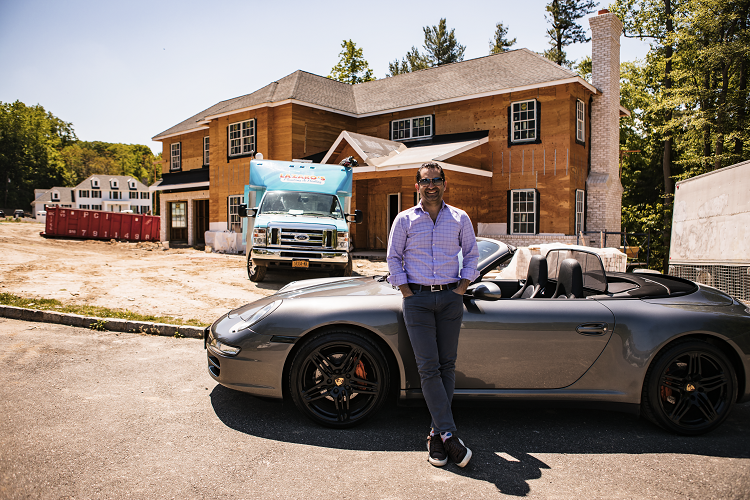
It was a difficult decision, stepping off the court and into a different arena, but as Parsa soon found out, there were parallels between the two industries, and the skills, connections and work ethic he developed would benefit him.
“Looking back, making that transition was one of the most pivotal decisions I’ve ever made. It allowed me to step into a new chapter without losing the performance mindset that tennis gave me.”
He has channeled that mentality and it has elevated him into one of the top players in his field. While the immense amount of time spent on court took a toll on his body, Parsa says his mind never felt better. He was at the peak of his coaching prowess, being able to bring more of his experience to every session on court.
Now, with a less stressful load on his body, and his mind able to build on every experience, it is all paying dividends in his real estate business. He still connects with his clients on a deep level which allows him to provide them with the expertise they need.
“What I’ve always valued most is the connection with the individual. As a tennis coach, I loved getting to know each player deeply–understanding their mindset, motivations and how to support them through challenging moments. It was a personal, layered process that required patience and presence,” he explains. “In real estate, I find myself doing something very similar. I’m guiding clients through major decisions, often emotional and high-stakes, and building trust along the way. While the physical demands are very different now, the emotional and mental commitment remains just as strong. Both roles require focus, empathy and a dedication to helping people succeed.”
His time on the tennis court didn’t just help him develop necessary tools to succeed in his next endeavor, he was also able to establish connections and foster relationships that carried into his real estate business. Because of his dedication and passion for what he did, he has earned the trust of those he has worked with.
“The relationships I have built over the years–whether with clients, families or other coaches–have played a huge role in my real estate career,” Parsa says. “A lot of my early business came from referrals within the tennis world. Plus, I think that background gives me a unique edge when working with athletes or clients who appreciate high-level performance and professionalism.”
Parsa’s success in real estate can be attributed to his years of both playing and coaching tennis, and the life lessons accrued during that time play a major role in his life. While he doesn’t miss the physical strain all those hours put on his body, he does miss the beauty of the game, and appreciates every minute he can find time to get on court today.
“I definitely miss the purity of it–the feeling of hitting the ball cleanly, stepping onto the court, tuning everything else out. There’s a rhythm to it that’s almost meditative. That sense of presence, of being completely in the moment, is something I still seek when I pick up a racquet today.”
He also has advice for those in the tennis field who may be cautious about taking a chance and trying something new:
“First, become an expert in whatever you do next. Bring the same discipline and daily structure you used in tennis. Don’t be afraid to fail–that’s part of growth. Understand your ‘product’, work on your communication, and show up every day ready to compete. The habits that made you great in tennis can make you great in business–or anything else.”