The Curtain Falls Down Under: Lleyton Hewitt Calls It a Career on Home Soil
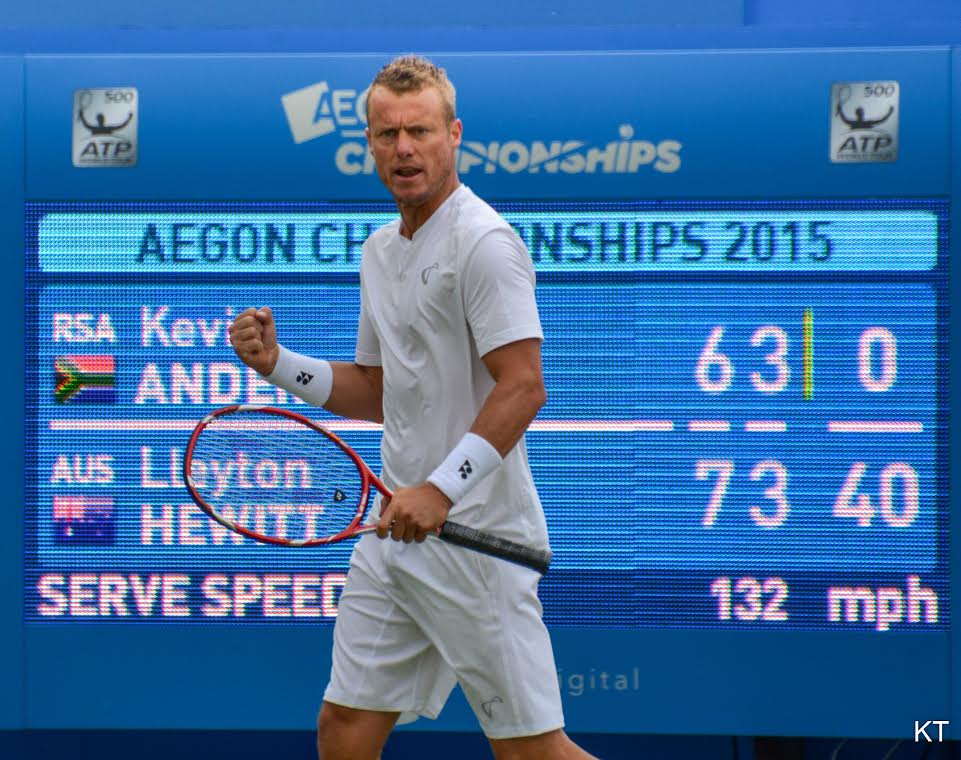
At the end of the 2016 Australian Open, one of the game’s most popular players will hang up his shoes and say goodbye to his professional playing career.
Australian native Lleyton Hewitt will play in his final tournament when he plays at 2016’s first Grand Slam in Melbourne, Australia, about 450 miles southeast of where he was born in Adelaide. The 2016 installment of the Aussie Open marks the 20th consecutive year he plays in his home country’s tournament.
It will bring to a close a truly remarkable career for Hewitt, who broke onto the scene as a doubles player at the Wimbledon Championships in 2000. He reached the mixed-doubles final with then-girlfriend Kim Clijsters, but the couple fell to Americans Kimberly Po & Donald Johnson in the championship.
It wouldn’t be long until the Aussie finally broke through at a Grand Slam, becoming the youngest male to win a major title when he paired with Max Mirnyi to win the U.S. Open Men’s Doubles crown at just 19 years of age.
Hewitt continued his U.S. Open success the following year when he notched the first Grand Slam singles title of his career, routing American Pete Sampras 7-6, 6-1, 6-1 in the 2001 finals.

“Lleyton is quicker. Maybe he doesn’t have quite the power of Andre [Agassi], but he doesn’t miss,” Sampras said of Hewitt at the time. “The speed of his hands and feet are phenomenal.”
The win made Hewitt the youngest male to win the U.S. Open singles title since Sampras himself won the first of his four titles in Flushing Meadows in 1990.
And it kick-started what would be a fantastic career for Hewitt. He would add one more Grand Slam singles title, the following year in 2002 at Wimbledon, and would go on to compile a career singles record of 613-259.
His lasting legacy might be more than just his success on the court. Hewitt became the face of Australian tennis and remains that face today, even as a new wave of talented youngsters from the land Down Under tries to make their mark on the tour.
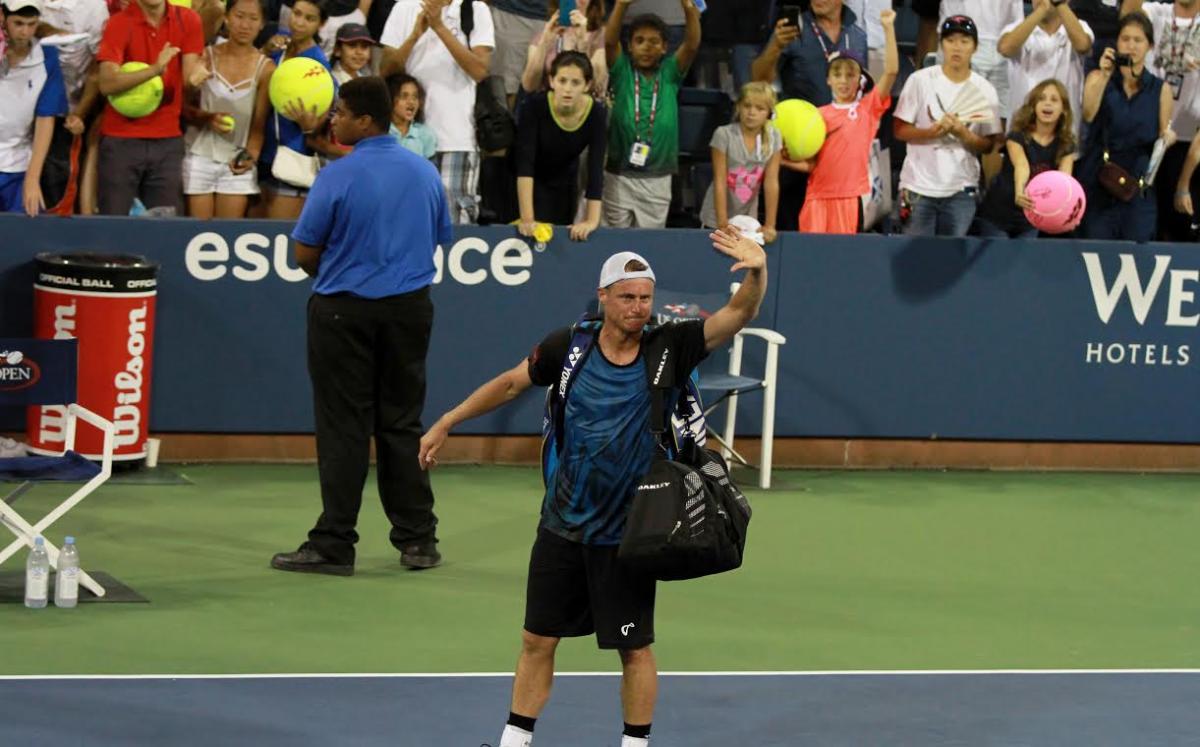
But that wasn’t always the case early on in his career. He often faced criticism from the Australian media for his lack of transparency and his chastising of Australian fans, and much of it might have come from his style of play.
Early on, he played with overwhelming emotion on the court. Fist-pumps, chest-bumps and loud yells were synonymous with Hewitt and oftentimes, earned him a lot of flak. But that was the emotion he played with because it was the way he had to play, being a smaller guy.
“I had to deal with those pressures and be mentally tough,” said Hewitt. “I don’t have the biggest game. I’m not the tallest or the strongest guy out there, so I’ve had to learn how to counter-punch those bigger guys. I’ve had to work on my return of serve since I was nine or 10.”
And it is those qualities, beyond how he performed on the court, that will leave him with an enduring legacy. It made him a recognizable athlete throughout sports, not just to the die-hard tennis fan.
Donquan Van Nguyen, a writer at The Roar, a well-known Australian publication, has covered Hewitt for the bulk of his career, talked what Hewitt has meant to Australians.
“Hewitt has no doubt carved out a solid if not spectacular career, winning two majors and becoming world number one at the tender age of 20 after winning the Tennis Masters Cup [now called the ATP World Tour Finals] in 2001,” said Van Nguyen. “It is of my belief that he would later pay for the success he enjoyed very early in his career, as injuries and inconsistency would start creeping in. But nonetheless, he has become one of Australia’s most trusted and respected sporting icons of the 21st Century. And when he finally hangs up the racket for the final time, it will no doubt be a very sad time for all concerned.”
As the face of Australian tennis, Hewitt’s next role might be as important to his country as his days on the court were. He will be the leader and mentor of a young group of Aussies like Nick Kyrgios and Bernard Tomic who have already seen their share of troubles and criticism.
After his retirement, he will become captain of the Australian Davis Cup team, and will lead the next generation of Australian tennis.
“It will be up to the likes of Tomic and Kyrgios, among many others, to carry his legacy going forward,” said Van Nguyen.
But before that, Hewitt has one more run left in him. We can expect him to bring that same fire and passion that fans have become accustomed to seeing, as he hits the Melbourne courts in January as a player one last time.