
Five Reasons Why Your Kid’s Practice Stinks
One of the biggest reasons your kid may not be improving is that his or her practice is not optimal. There can be a lot of reasons why a player’s practice is not working to provide the necessary stimulus needed to develop quickly and efficiently. In this article, I will discuss five common reasons that practices fail.
1. Coach Talks Too Much
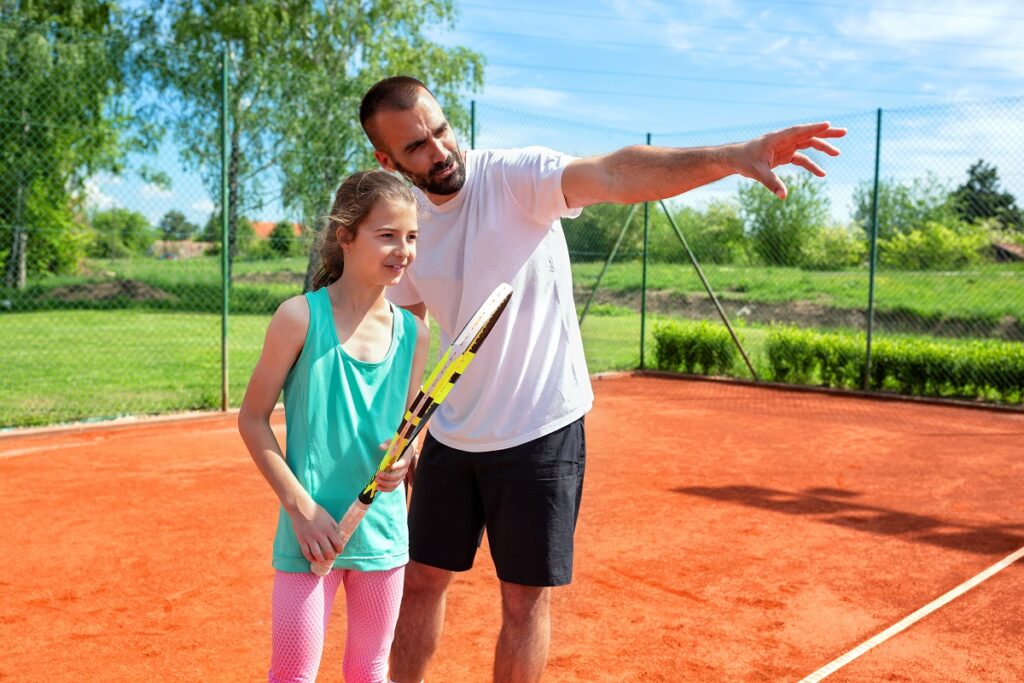
Some coaches just cannot help themselves. They need to talk, talk, talk. There is nothing worse than a coach who loves to hear their own voice all the time. Kids need to maximize their practice time and get a good workout. Coaches who talk too much interrupt the flow of a group lesson and make a class less physical. Good practices should be very physical, and the coach should restrain himself or herself to giving only necessary commentary and critiques as much as possible.
Here in New York, time is a valuable commodity. Kids are very busy. Students have lots of homework. Commutes are long. We simply don’t have the luxury of spending valuable time in a class talking too much. Kids need to work, hustle, grind and sweat. Coaches can save the in-depth critiques for a debrief session or meeting with kids and parents after class is finished. Water breaks and ball pickups should also be performed in a time-efficient manner! Many coaches waste so much time during ball pickups and water breaks that a significant portion of the lesson is lost.
2. Bad level
It’s vital to have the best level possible in your kid’s class. Everyone wants to “play up,” so this makes running a class or academy program very challenging. If you want your kid to get better, he or she needs to play with strong players at the same or better level. Occasionally it may be useful to “play down” against a lower level kid to work on handling pressure or to work on a new technique or strategy—but not too often. Don’t believe it when a coach tells you the level doesn’t matter or that your kid is in the right class, even though he or she is the best one. Being the best one often means your kid is helping the lower level ones get better.
Many times I recommend private hitting to escape this level trap. Parents stuck with kids in a suboptimal group can get private hitting sessions with good college players, for example, to provide more challenge.
3. Too Much Or Too Little Technique
Some clubs and programs work on a lot of technique. That’s a problem if your kid already has good form. It’s a waste of time to drill and focus on technique details that are already formed. On the other hand, many programs don’t work on any technique. Those types of group classes are a disaster for kids who still need technical development. As time passes, bad technique becomes more and more ingrained in this type of program and the kids can develop recalcitrant bad habits and major technical flaws in their game. The best approach is a flexible program that can customize the training for your child by providing a mix of good technical and tactical instruction. Unfortunately, many programs are rigidly tactical or technical using a dogmatic approach rather than tailoring the training plan to the actual needs of each individual player.
4. No Serving, Returning, Or Set Play
One of the worst mistakes in tennis coaching is leaving serving practice to the last 10 minutes of a lesson or group. This is a very common method of arranging a practice and it fails to give enough priority or time to developing what is arguably the most important shot in the modern game.
In addition, many practices neglect the return of serve. Players can often go weeks in clinics with very little serving or returning. The kids often play baseline points or participate in drills. While there is a place for baseline points and drills, practicing points with serving and returning is paramount.
Related to the importance of serving and returning, players need to play sets—preferably every day. Set play is critical for players to develop match toughness and strategy for tournaments. Many kids just play team singles or some kind of baseline points all week. Then they wonder why they never feel prepared for weekend tournaments where serving, returning and set play competence is required.
5. Bad Ratio
A parent recently expressed frustration to me that her player’s high performance class was not working well because it had six players on the court. Apparently, the club “needed to get makeups in.” That kind of ratio is a development killer. I told the parent to find a new program—fast. In Spain, over the last four decades, legendary coaches like Luis Bruguera and Pato Álvarez developed a training system with two players per court and coach. That ratio provides a tremendous quality to the player and helps to accelerate development. I fell in love with this approach when I first started studying in Spain, nearly 20 years ago. Look for a ratio of two to three players per court and coach and you will see higher quality workouts and better progress for your player. Four or more players per court is typical in NY to save money but will not provide a world-class training environment in most instances.
Conclusion
There are many more reasons why your kid’s practice may suck. The five above are the ones that are the most salient to me. Don’t let even a minute of your kid’s valuable development time be wasted by a bad practice. Those minutes really add up when compounded monthly and annually.
You can visit YouTube.com/ChrisLewit to view the accompanying video to this article. If you think of any other common reasons for a bad practice, share them by emailing me directly at Chris@ChrisLewit.com.