
How College Tennis Has Changed: My Talk With Stanford Head Coach Paul Goldstein
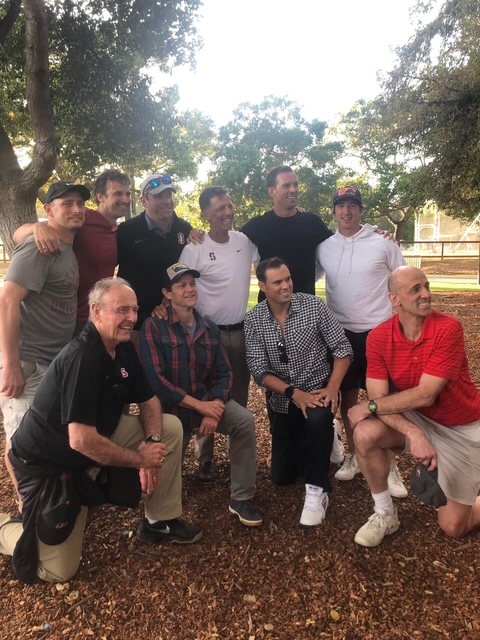
The landscape of college tennis is always changing, especially with the advent of NIL, transfer portal and the influx of international players. As someone who competed in college tennis at the highest levels, I think examining the dynamics is important, and so I spoke with my former Stanford teammate Paul Goldstein who is currently the head coach of the Cardinal.
Goldstein is the only person to ever win Kalamazoo three times, and is the last person to defeat Novak Djokovic in the opening round of a Grand Slam. Here is Part One of my interview with Goldstein as we discussed all things college tennis. In the next edition of Long Island Tennis Magazine, I will share Part Two of my interview with Goldstein where we discussed his playing career, and more advice for up-and-coming junior players.
Becker: What do you love about college tennis?
Goldstein: I love the competition of college tennis. Having played as a junior for 10 years, professionally for about 10 years, with four years of college in between, there’s just something about that team competition that is impossible to replicate. I never played high-level Davis Cup, and things like the Laver Cup weren’t around, but there’s an intensity to collegiate tennis; a sort of fraternity and brotherhood that comes with it. Four years of playing, and approaching 12 years of coaching, I’ve just not been able to find anything in the world that matches that level of intensity. I was working in Silicon Valley after my playing career, and I can’t say I was in the market to be a collegiate tennis coach, but the opportunity to do it here, at our alma mater, Ricky, was pretty special and hard to pass up. It was a significant transition, but I’ve loved it, and it’s been a good fit for me. We got a really good thing going right now, and I’m really enjoying it.
Becker: What are the major changes you have seen in college tennis over the last 25 years?
Goldstein: Certainly the prevalence of international student-athletes in college tennis has increased and that is one of the major changes. I’ve also seen, just like in professional tennis, an increase in the quality of depth. That wasn’t around when we were playing. There are competitive players playing down in the lineup, not just the Power Conferences, but the mid-majors as well, who can play the game. And so the quality of depth has increased exponentially, and it has become a little bit harder to really separate yourself. I’ll tell you, right now feels a little bit like a golden age, Ricky. If you look at Wimbledon, in the second round of men’s singles at Wimbledon, there were 15 former collegiate tennis players out of the final 64. I think there might have been 25 or 26 in the first round, and that hasn’t happened in a while. That is pretty unique now. I think if you go back further when the McEnroes, Arthur Ashe, Stan Smith. Etc played college tennis. Some of the best in the world were playing college tennis, but we got away from that a little.
There have been really significant changes in collegiate athletics in general the last few years with the onset of NIL. We got revenue sharing starting, and the transfer portal has picked up in the last couple years like nothing we have seen before. And so the volume of transactions going on now in all of college athletics is remarkable.
Becker: Do you see a lot of transfers and players changing schools in tennis?
Goldstein: A lot when you compare it to what it used to be when we played, but is it a lot compared to football, basketball and some other sports? No. I think at one point, something like 30 percent of the Division I college baseball players were in the [transfer] portal. I don’t think it’s that extensive in tennis, but it’s certainly a lot more prevalent than it ever has been in our sport.
Becker: And do you see a lot of players getting NIL money?
Goldstein: It’s hard for me to know. I would just be speculating, and it depends on your definition of a lot, but do I think it’s happening? Yeah, I do. It’s becoming more and more ingrained. And then back on July 1, the NIL rules changed again, so we’ll see. We’re still in this wild, wild west stage of things. It’s certainly not the majority of players by any stretch of the imagination, but a select few are getting some I would think.
Becker: So what would your advice be to a junior player who may be under the radar, and is looking to play college tennis at the D3, D2 or lower-level D1 level?
Goldstein: The most important thing at every level of the game is to focus on your development and getting better. I used to ask this question to recruits and when I was working in Silicon Valley: Do you love to win, or do you hate to lose? And there’s no real wrong answer there. I’m looking for the answer that is the most motivating. I always felt like I was the “I hate-to-lose guy”, and so I looked for that. But then I saw an interview with Kobe Bryant. He was asked the same question, and he responded: “Neither”. He’s said, ‘I love to learn, I love to figure it out’. And that really stuck with me, because the most motivating force is figuring it out, and learning. What can you learn from that experience to get better? I think no matter where you are, it’s about getting better. You look at Jannik Sinner losing to Carlos Alcaraz at the French Open. For the next two weeks, he thought about what he could do to beat him at Wimbledon; just focused on getting better. So at every level, it’s what can we do to get better? So I’d keep my focus on that and a lot of the other stuff takes care of itself.
Becker: How do you evaluate a potential recruit? Do you use Tennisrecruiting.net, UTR, etc.?
Goldstein: Tennisrecruiting does have a good comprehensive list, but I don’t pay as much attention to the rankings as I do to the UTR. I just want to make sure I’m not missing anybody, so I’ll look at the top 50 to make sure I know who’s out there. I use it more for that purpose, and then I’ll use the UTR for their level. But even UTR is not the end-all, be-all. Seeing someone play in person and talking to their personal coach, those are the most important things. But a UTR is a really good first place to look.
Becker: Have you found anything that college freshmen aren’t prepared for when they arrive in college?
Goldstein: Failure. Tennis players should be pretty equipped for failure because even the best in the world, let’s say Federer, won 54 percent of his points when he played, which means he failed 46 percent of the time. As you get to the higher level, there’s failure, and I don’t mean that in the negative connotation of the word. We all do it, and it’s how you learn from that experience and what kind of resilience you can build from it.
It’s also really hard to make the adjustment of being on a team. One of the biggest challenges is coming into college and being the 6th or 7th player in the lineup, and it can be the difference between playing and not playing. Our sport isn’t like others where you can sub somebody in, it’s pretty binary. The other thing is you are on your own in school; you’re going to have tests that you don’t do well on, or relationships you develop, and it’s about managing all of that when you are away from home. It’s a major transition for everybody. I don’t care how strong of a player you are, or how great of an academic student you are, there’s going to be opportunities to develop resilience and have a growth mindset.