
Injury Prevention: Tennis Elbow
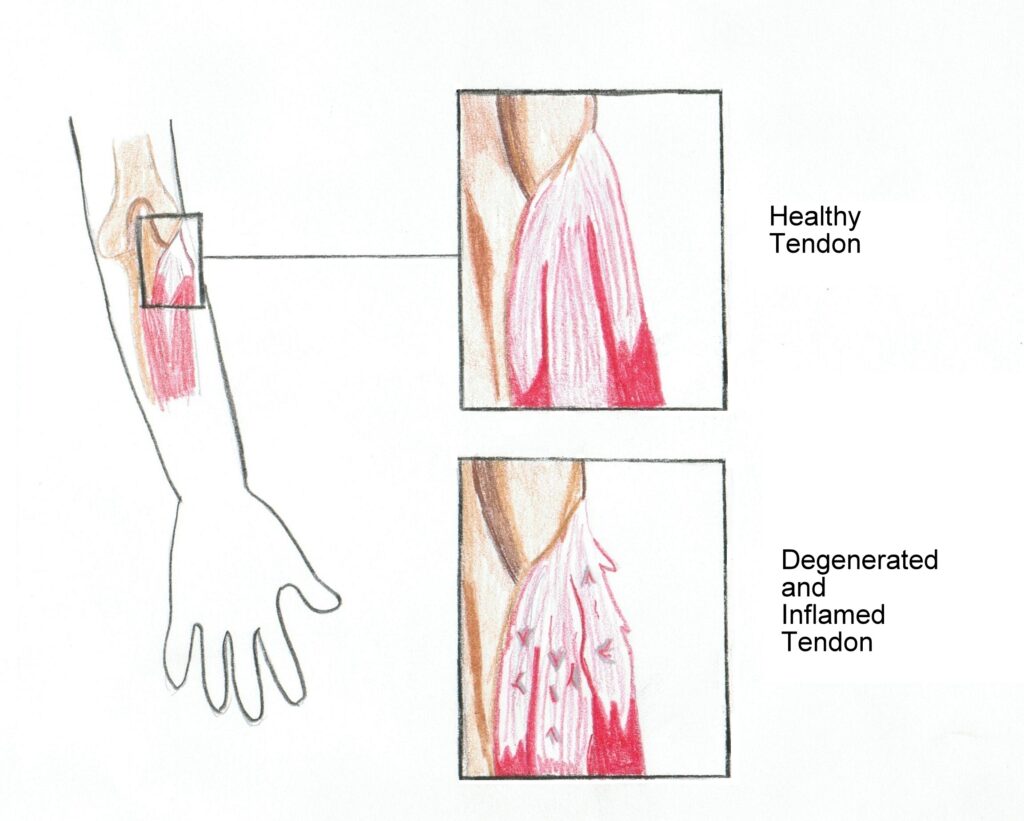
Tennis elbow is a common and painful condition that affects of the outer portion of the elbow at a group of muscles are called the wrist extensors. These muscles are responsible for making a firm grip, as well as straightening the wrist and fingers. The wrist extensors originate at a portion of the elbow called the lateral epicondyle. Inflammation and degeneration of this area is called lateral epicondylitis, or “tennis elbow.” Treatment options include rest, ice, compression banding, physical therapy, anti-inflammatory medicines, cortisone injections, and even surgery should other options fail. Tennis elbow causes many players to miss a significant amount of time on the court and can seriously affect one’s game. It can even cause pain during everyday activities.
Recent state-of-the-art advancements in the treatment of many sports medicine injuries involve the use of Platelet Rich Plasma, or PRP. PRP has been used for muscle strains and tears, tendinitis, and even to augment healing during surgery. Doctors have begun to use PRP for tendinitis that occurs around the elbow such as tennis elbow and golfer’s elbow. Recent studies suggest that the use PRP for elbow tendinitis can be very effective.
PRP is a concentration of healing factors from one’s own blood. To create PRP, blood is drawn and placed in a machine called a centrifuge that separates the platelets from the rest of the blood and places the concentrate in a syringe. The area of injury is cleansed and PRP is delivered through an injection into the injured site. The procedure itself usually takes about 20 minutes, however the injection only takes 30 seconds to a minute. PRP treatments are done in a doctor’s office.
After the procedure is completed, patients will rest for several days and then can gradually resume their previous level of activity. Sometimes, physical therapy is required to optimize a patient’s return to sports. It is not uncommon for patients to feel a little sore after the PRP is administered for a few days, however, the soreness is temporary and usually well-tolerated. PRP treatments are done after a consultation with a specially-trained orthopedist.