
A Look Back at Djokovic and Kvitova’s Quest for Wimbledon Glory
The Champiosnhips at Wimbledon left the tennis world buzzing in 2014. Two new two-time champions, one of the best matches in the history of the sport, a rising nation, a rising star and much more made for an exciting two weeks of tennis at SW19.
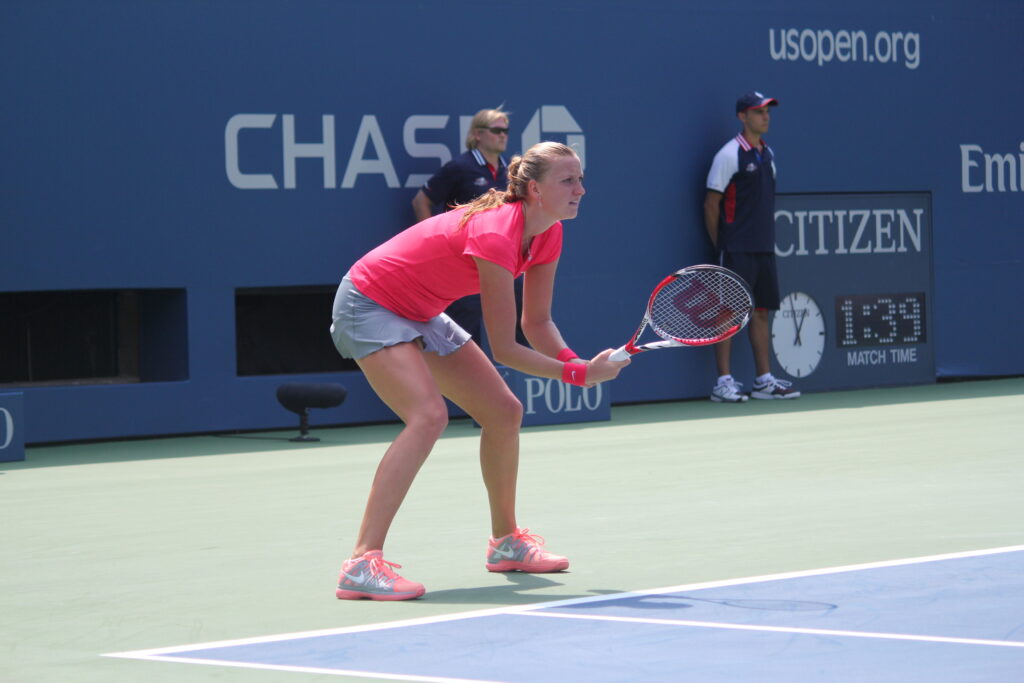
When the dust settled, Novak Djokovic won his seventh career Grand Slam title, his second at Wimbledon, while lefty Petra Kvitova served her way to her second Grand Slam, both on the Wimbledon grass. The two titles could not have come more differently.
Djokovic has come to be known over the years for his consistency. As Rafael Nadal did at this tournament, at least one big name seems to drop out either in the first week or two a lower-ranked opponent early in the second week. Novak hasn’t bowed out before the quarterfinals of a Grand Slam since the 2009 French Open, and he once again looked like he would claw his way deep into a tournament once again.
For all intents and purposes, the Serb didn’t look all that comfortable early on, playing a classic match against Czech Radek Stepanek, a four-set battle in which he showed that from the back of the court, he was indeed vulnerable. His backhand, arguably the best shot in the game of tennis, looked shaky, raising the question of whether or not his recent loss to Nadal at the French Open had taken all the mental toughness he had left.
Against tougher competition in the always dangerous counter-puncher Gilles Simon and aggressive baseline Jo Wilfried Tsonga, Djokovic looked much better. Neither opponent really pushed Djokovic, as he took both matches in straight sets.
The pressure began to mount on Djokovic, and not necessarily because he was getting deeper into the tournament. Nadal, always a favorite to advance to the end of any tournament he plays in, fell in somewhat tame fashion to 19-year old Nick Kyrgios of Australia in the fourth round. Always Djokovic’s nemesis come the bookend of majors, Nadal’s loss opened the door for Novak, perhaps making him the favorite.
The major test would come against a dark horse, a guy that really hasn’t shown his face much in the last couple of years. Marin Cilic, who had been suspended for nine months due to a doping violation, had, at one point in his career, been a top-10 player. Sometimes erratic, Cilic always was dangerous with a pretty big, albeit funky looking, serve and penetrating, flat groundstrokes. With Goran Ivanisevic, a grass-court specialist in his own right on board, Cilic has been thumping serves and been seemingly less afraid to come to net. Against Djokovic in the quarterfinals, he put forth a valiant serving effort, managing to grab a two sets to one lead before succumbing to the pressure of the moment and his opponent.
All the while, Andy Murray, the guy who was making very little noise for a defending champion, forget a British defending champion on his own home turf, was playing some very solid tennis. Not even really considered a favorite to reach the championship match let alone win the whole thing, Murray made his mark in the first week, blasting the ball off both wings, and holding serve with ease. That was all well and good, but some guy named Grigor Dimitrov waltzed across the grass to meet him in the quarterfinals. If you haven’t heard of him before, check back in the year, the new top-10 player may very well end up in the top-five, and in a hurry. Many call Dimitrov “Baby Fed,” after the great Roger Federer, but he has shown that he wants out of that shadow, bringing one of the best serves and tons of variety to the table. In quick fashion, Dimitrov ousted Murray from the championships, setting up a semifinal matchup with Djokovic.
At this point, a kind of odd set of semifinals was in store. Without Nadal and Murray, who usually occupy at least one spot in the finals, forget the semifinals, opportunities were up for grabs in the rest of the field. Milos Raonic powered his way through Nadal’s quarter for a meeting with the legend, Federer. Raonic has an explosive game, full of massive serving and a big punching forehand to follow up. The guy is not quick enough to last in rallies, but against anybody outside of the top-10, he doesn’t really need to be. He holds serve ridiculously easily, and finds a way to sneak a break or a tie-breaker with his phenomenal serving.
In the Djokovic-Dimitrov semifinal, the quality of hitting was fitting for that round of a major. Dimitrov might have played the match of his life, and Djokovic misfired on his forehand, which is his more vulnerable side. The match came down to two tie-breaks in the third and fourth sets, which Novak clawed his way through, albeit with his “B” game, to reach another Wimbledon final.
On the other side, things were far less complicated for the seven-time Wimbledon champ, Federer. Raonic never threatened his serve, leading to a relatively straightforward victory, and a rematch of the classic U.S. Open semifinal that Djokovic and Federer played.
In a classic five-set thriller that included match points saved, a massive comeback to force a deciding set, and much more, Djokovic held on to take the title, 6-4 in the fifth in just short of four hours.
The final on the women’s side may not have lived up to expectations, but a shock heard around the world made for an extremely open and interesting tournament. Serena Williams, arguably the best player to ever live, lost early on, bowing out to Alize Cornet, who really didn’t do much after, losing to eventual finalist Eugenie Bouchard.
Oh, Canada … that seemed to be the theme of the tournament, as Bouchard, only 20 years of age continued her terrific season with a thrilling run to the finals. Solid on both sides, with a decent serve and terrific mental attitude to boot, Bouchard is always a threat. Much like Andre Agassi used to do, Bouchard hugs the baseline, taking every ball early if she could help it.
“Genie” was a genius in a tricky first round encounter against wily veteran Daniela Hantuchova, coming back in both sets to squeak out a straight-sets win. A couple of easy matches later, and everybody would have expected Bouchard to face Serena. Cornet’s shock lead to a matchup with the Canadian, which Bouchard handled with poise in a first set tie-breaker, leading to a hard fought win.
It was shocking to see the ease with which Bouchard ran through her next two matchups, against two very high quality players in Angelique Kerber and Simona Halep. With Serena out, Halep had Vegas’ money, and looked like she would be ready to take her first Grand Slam. A strangely routine loss to Bouchard proved otherwise.
On the other side of the bracket was 2011 Wimbledon Champion Petra Kvitova. Known for her erratic power, Kvitova had the experience necessary to take home the title. The question was whether or not she could bring her best tennis to the table.
In a third round encounter with Venus Williams, one of the best players ever on grass, Kvitova had trouble. What was the issue?
She was on her way out of the tournament, as Venus was outplaying her in every facet of the game. Somehow, Kvitova held her nerve to squeeze by in a thrilling three-setter. At the end of the day, something about that match must have loosened Kvitova up, as she played lights out once she closed that match out.
Fast-forwarding to the quarterfinals and semis, she had the convenience of playing two fellow Czechs, who she handled relatively easily. They could do nothing to neutralize her huge serve, which clicked all through the second week. With scoreboard pressure on her side, she found a way to get through those encounters, setting up the finals against Bouchard.
It was hard to tell if Genie would be able to do anything with Kvitova’s serve, as many felt her groundstrokes were far superior. Unfortunately for her, Kvitova played the match of the year to clean the court, dominating for an easy straight-set victory and the Wimbledon title.
All the credit in the world to Kvitova, as she played a level of tennis in the finals that not even Serena could have touched.
Two excellent, story-filled tournaments in the bank, as the pro tour now heads to the American hard court season, ready to thrill the fans one last time at the final Grand Slam of 2014, the U.S. Open come late August.