Sharapova’s Slippery Slope
Loss of endorsements and doping accusations may mar WTA star’s legacy
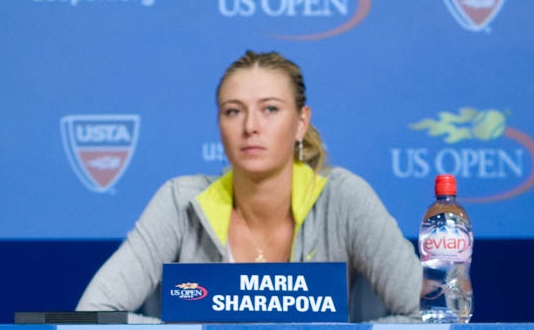
On March 7 of this year, Russian star Maria Sharapova called a news conference for what she called a big announcement. But even the dozens of reporters in the room and those watching the conference from afar weren’t prepared and didn’t expect what she would say next.
“I wanted to let you know that a few days ago, I received a letter from the ITF [International Tennis Federation] that I had failed a drug test at the Australian Open,” Sharapova said. “I did fail the test and I take full responsibility for it. I don’t want to end my career this way. And I really hope that I will be given another chance to play this game.”
Following that press conference, tennis fans around the world played the waiting game as the ITF deliberated its ruling. In that time, people took sides: Sharapova was either a serial steroid user or she was being treated unfairly. The whole situation brought to light a previously unknown (to most of the world) substance: Meldonium.
Meldonium, also known as Mildronate, is a drug used to treat coronary artery disease. It does so by expanding the arteries, helping increase blood flow and thus increasing the flow of oxygen in the body. As of Jan. 1 of this year, the World Anti-Doping Agency (WADA) added Meldonium to its list of banned substances due to evidence that it was being used by athletes with the intention of enhancing performance.
Meldonium is a drug manufactured in Latvia and distributed to Russian and Baltic nations, and is not permitted for use in the rest of Europe and the United States.
Sharapova said it was a drug she had been taking for years due to a family medical history.
“I had been taking this medicine for the past 10 years, but on Jan. 1, this became a prohibited substance which I did not know,” said Sharapova. “I received an e-mail on Dec. 22 from WADA about the changes happening to the banned list and you can see prohibited items, and I didn’t click on that link.”
In the weeks following Sharapova’s announcement, WADA clarified Meldonium as a banned substance, saying that the jury was still out on the scientific evidence of the drug and its excretion time from the body, and saying that athletes who have tested positive before March 1 of this year could have their suspensions overturned.
“We’re not talking about a big climb-down at all, we’re talking about a clarification and assistance we’ve given to help make sure the right outcomes are reached,” WADA spokesman Ben Nichols told ABC News Radio. “This is an unprecedented situation with a large number of cases—it’s a new banned substance.”
Even with all of the fuzzy and often unclear discussion of the substance by WADA and the addition of the drug to the banned list, the ITF came down with its ruling of a two-year suspension for Sharapova, retroactive to the Australian Open.
The ITF announced the decision of an independent tribunal in a 33-page report, which included that Sharapova had not listed Meldonium “to the anti-doping authorities on any of the doping control forms Sharapova signed in 2014 and 2015.”
Sharapova promptly responded to the ITF’s ruling:
“While the tribunal concluded correctly that I did not intentionally violate the anti-doping rules, I cannot accept an unfairly harsh two-year suspension. The tribunal, whose members were selected by the ITF, agreed that I did not do anything intentionally wrong, yet they seek to keep me from playing tennis for two years. I will immediately appeal the suspension portion of this ruling to CAS, the Court of Arbitration for Sport.”
In the ITF ruling, a bizarre revelation came out from Sharapova’s agent, Max Eisenbud. One of his roles as her agent was to check WADA’s updated prohibited substance list each year during he and his wife’s annual vacation to the Caribbean. But Eisenbud and his wife filed for divorce and didn’t take their annual vacation, resulting in Eisenbud not checking the updated WADA banned substance list for 2016.
“In November of every year, I would go on vacation in the Caribbean after the championships. I would have my assistant print out the most updated doping prohibited list, along with the new proposed WTA and ATP rules, and the calendar for next year,” Eisenbud said. “I would make a file. I would go on vacation and sit at the pool, with all the substances that my players were taking, and then sit there and just cross-check, to make sure that everybody, what they were doing, was not prohibited. In 2015, I didn’t go on vacation for obvious reasons.”
Eisenbud, like a loyal agent or lawyer would, took complete responsibility for the lapse in judgment, but does that completely absolve Sharapova of responsibility? The ITF didn’t think so and in a very damning statement, said in the report:
“She is the sole author of her own misfortune.”
As she said she would and to the surprise of no one, Sharapova appealed the suspension.
“Maria looks forward to CAS hearing her appeal and hopes she’ll be able to play again,” said Sharapova’s lawyer, John Haggerty. “The ITF tribunal concluded she had no intent to do anything wrong, and she thinks a two-year suspension is unfairly harsh.”
The CAS announced it would have a ruling on her appeal no later than July 18, so until then, we don’t know how severe her full punishment will be.
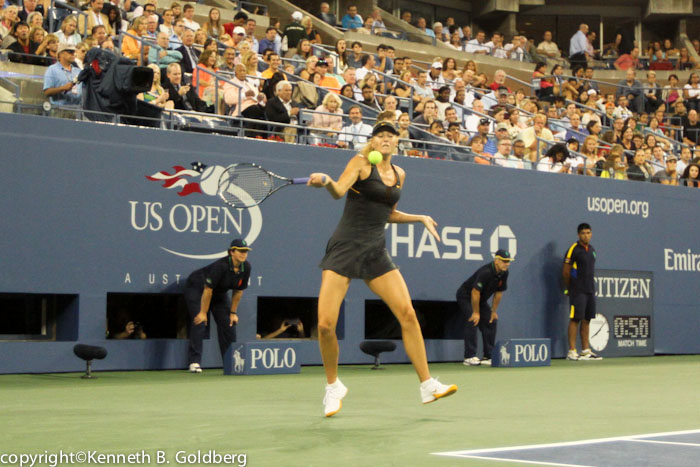
According to Forbes, Sharapova is currently the seventh-ranked female tennis player in the world and the second highest-earning female athlete, a title she held for more than a decade. In 2014 alone, she earned $23 million from endorsements from a variety of major companies, such as Avon, Tag Heuer, American Express, Head, Cole Haan, Nike, Evian and Porsche among others. If the suspension stands, Forbes estimates that it could cost Sharapova as much as $50 million in lost earnings over the next several years, via reduced sponsor income and prize money, and the potential loss of future endorsements as the corporate world looks to avoid the controversial star.
Nike and Porsche have suspended their promotional work with Sharapova, but have stood by their highly visible spokeswoman. Her suspended Nike contract is reportedly an eight-year deal worth nearly $70 million. Companies such as Avon, Evian and Head have backed Sharapova and shown their support. However, Tag Heuer did not pick up their option to renew with Sharapova, and American Express, who had a deal with the Russian based on the U.S. Open, did not renew their deal due to the fact her appeal may not be heard by the time the Open comes to Flushing Meadows late this summer.
To further compound her losses on the financial side, recurring injuries to her rotator cuff and shoulder limited Sharapova to just four WTA events in the last eight months. The longer she sits on the sidelines and awaits a resolution to her appeal, the clock ticks away on her career. But in this day and age, with players in their early to mid-30s such as Roger Federer and Serena Williams finding success, there is still a window for Sharapova to regain her form on the court.
All that being said, the failed drug test revelation and ensuing punishment is the first time a major star in tennis has been caught for using a banned substance, making this a groundbreaking story.
Sharapova’s fans continue to back and support her despite the suspension.
Repucom’s Celebrity DBI, an independent index that quantifies and qualifies consumer perceptions of celebrities, Sharapova’s DBI score fell only two percent after the failed test and her appeal score was unchanged. The same poll found her endorsement score dip by 11 percent and her trust score dropped by 10 percent. Back in January, Repucom’s Celebrity DBI found Sharapova to be the most marketable female athlete globally. The poll found that Sharapova achieved the highest aspirational rating amongst all tennis players overall, with a score of 76.60 in Turkey, where she is the most marketable female athlete and 71.55 in her home country of Russia. Sharapova is also the tennis player who scored the highest for breakthrough, trend-setting and endorsements, compared to her fellow tennis female athletes.
When Sharapova’s appeal is heard, there will undoubtedly be one side not happy with the ruling, but even if Sharapova wins the appeal, it may be tough for her to ever shake the label of “Cheater,” however unfortunate and unfair that label may be.