
Should My Kid Homeschool For Tennis?
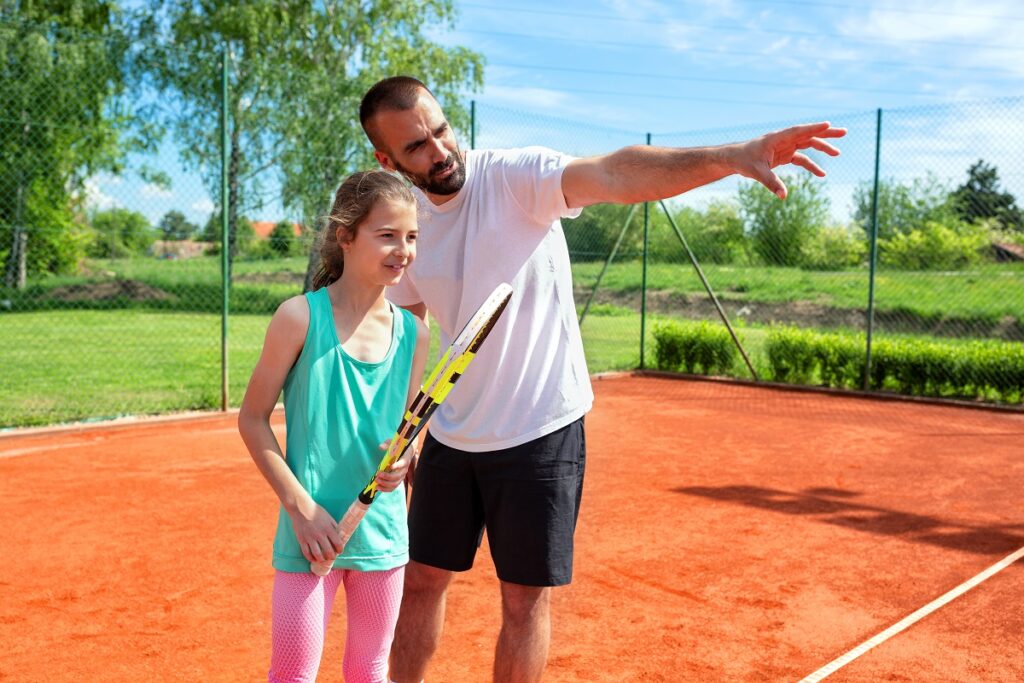
Many tennis families consider homeschooling or online schooling for their son or daughter. Parents ask me all the time whether I think it’s a good idea or if it’s the right time, etc. For serious kids who want to compete and win nationally and internationally, I generally advise that it’s a great option. Interestingly, I also believe that homeschooling can be an excellent choice for younger players under 10 and for less gifted players.
Why is homeschooling so beneficial for tennis?
To become a world or even national champion requires an incredible amount of work and time. Homeschooling frees up the schedule and opens up new possibilities for training days and weeks. In short, time is money. Time is valuable. Homeschooling creates more time in the training week to add more volume and variety to the player’s regimen. Of course, homeschooling allows players to travel nationally and internationally to tournaments and still get schoolwork done, which is another important plus.
Training twice a day
I tell parents all the time that training twice a day for tennis is the gold standard. While it’s possible to become good training once per day as most kids do, nothing compares to a daily double dose of high quality tennis training. Coaches, players, and parents often try to argue that they can squeeze in the training they need after school, but it’s almost always better to train twice per day. There is a special magic that occurs with a solid twice a day training program. In a typical schedule, there is a practice in the morning followed by lunch and rest and then a practice in the afternoon. Regardless of the timing, having two practice blocks is a huge advantage.
As a coach, I love having two sessions a day to work with my players. We can focus on nuances and details and cover more topics for the student. With my high performance students who only train one block a day, I always feel like we are rushing and squeezing things to practice. They may not play enough matches, for example, or the players don’t develop an all-court game. Or the players may have some technical or tactical holes, simply because they do not have enough time to master the elements necessary.
I know many players whose training week is comprised of a couple hours of group class daily after school, and maybe one private with limited fitness training. Does that sound like a familiar schedule to you if you are a player, parent or coach? That’s a very common plan for the typical junior who is trying to get a good ranking. This type of schedule is about 10 hours a week of tennis plus maybe a weekend tournament. Players can become good with this typical schedule, maybe even reach a solid national ranking, but you can’t become a national champion, D1 blue chip recruit, or pro player with this amount of training time per week. To become top in the country or world is going to require doubling this commitment, at least 20 hours a week. Homeschooling frees up time to double the training workload easily with less scheduling stress.
Fitness and Injury Prevention
Playing twice a day at a high intensity is going to make your player fitter. There is a physical fitness component to playing twice a day that makes a kid stronger, and develops more endurance. This tennis specific fitness is a big advantage. Players who homeschool also have more time in the day to work on flexibility, mobility and injury prevention, and will have more time to go to the gym to build power and strength, work on agility and movement, or develop stamina. It is common for players who have limited time and long, tough school days to skip some of these important physical training areas. I regularly see schooled kids who skip fitness and injury prevention, which can lead to injuries and underperformance, and thus frustration.
Player welfare and health
In my experience, players who homeschool and train twice a day are often less stressed about their tennis and life in general. The reason is that they are not rushing around trying to squeeze in training and other activities. They have more time to breathe and relax. This is conducive to better player welfare, and mental health. Kids are so overscheduled and rushed these days, especially Eastern kids, that they are often loaded up with pressure and anxiety, which can affect their performance on the court. Parents or kids themselves who try to stuff all the necessary training into a regular school schedule often find that the player gets injured or stressed out because they are trying to fit too much training into a schedule that does not have enough time. Sometimes the kid sleeps less and gets poor recovery. Sometimes they skip practices or fitness. Trying to squeeze in elite tennis training along with a rigorous schooling schedule can be a disaster.
But my kid should be older, serious, and at a high level before starting homeschool, right?
Sometimes I recommend parents wait until a player is very serious and older to homeschool. I like to see that the kids prove they are ready. The reason is that sometimes players will not deserve homeschooling because they don’t work hard enough in even one session per day. Watch out for this trap. Many parents think homeschooling should be only for elite, super talented players or for those competing at the ITF level, which is typically ages 13 and up. Lately, I have changed my mind about this.
I have been working with homeschooled kids who train full-time at young ages. It’s been eye-opening and positive overall. For example, I coach two highly-talented young players, Vlada Hranchar from Ukraine and Sofia Houlbert from France, the past two years full-time daily, along with others, and it’s a very healthy and positive way to work. Contrary to a lot of recommendations about limiting volume and training time at these young ages, I have found that homeschooling and training twice daily is a great way to build the technical, tactical, mental, and physical foundation of an elite player at a young age. While these two players I mentioned are gifted, even less talented kids can benefit from training twice a day. In fact, I would argue that the less talent your kid has, the more they need to train twice a day to get an advantage over the others.
Reservations and alternate options
It’s true that homeschooling or online schooling is not for every kid. I have four kids myself, and during the pandemic, two of my kids did not like online learning. Some kids may have special learning disabilities or struggle with certain online formats. True homeschooling with a private teacher or parent helping at home can be a solution. Technology and advances in online education are rapidly changing the landscape and possibilities. The quality and effectiveness of online education as grown immensely over the past decades and will continue to do so.
Another alternative is to find a brick and mortar private or public school that will allow a kid to get out early. This can sometimes be a good compromise, but it’s hard to find schools that will be flexible. If a kid can get out at noon or 1pm, it’s possible to create a pretty good schedule for the rest of the day, even two training blocks, which is the gold standard.