
We Really Can Fake It Until We Make It
I’ve watched tennis for 55 years and have seen players from multiple generations and from all over the world. It’s difficult to avoid noticing that the sport has changed in so many ways, from advancements in technology, athleticism and the evolution of training. Most fascinating is that it has remained static in one very important area.
There is a good reason for this constant.
As a preface to this area it’s important to know that the average ratio of play to in between points is about 7:1.
So if we watch a video of Rod Laver or Jannik Sinner, we will usually see just about 17 or 18 minutes of live play spread out over a two hour match. While we will also see a tremendous variation of in play style during points, we might also notice a remarkable uniformity of behaviors in between points.
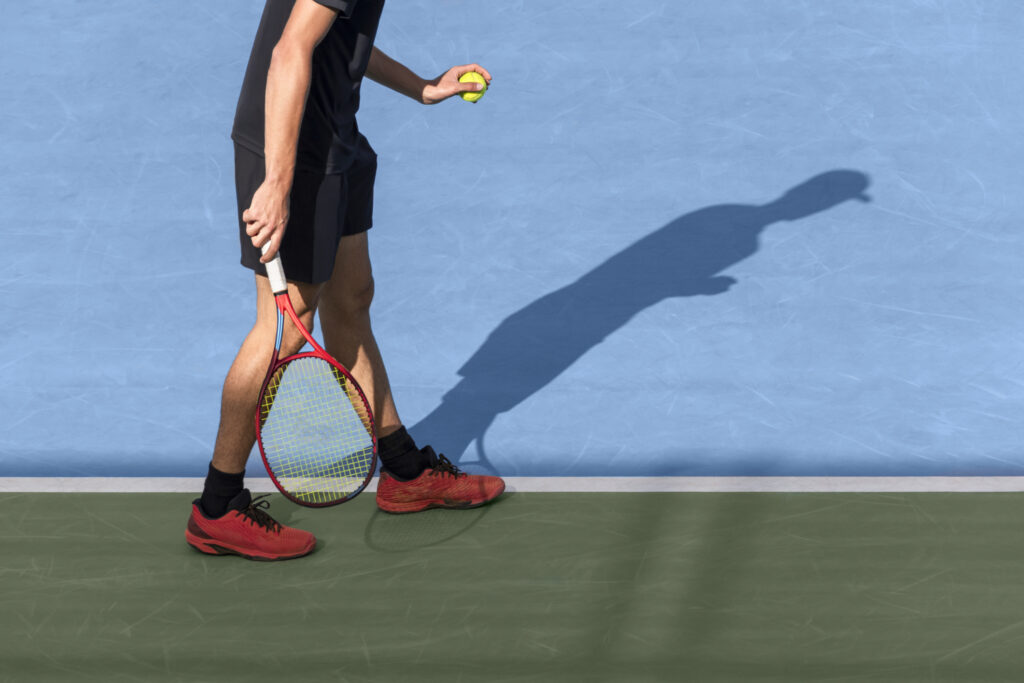
Typically, expert players will remove the racket from their playing hand and hold the racket securely with the head upward while they walk with poise, posture and purpose to ready themselves for the next shot.
Before we ask why this matters, let’s consider that if our behavior in between points didn’t matter, it would be an extraordinary coincidence that players from all over the world across multiple generations were so unvarying in this set of behaviors. To answer why it matters, we might look to the work of physiologists like Aaron Beck who is the father of modern cognitive behavioral theory. He believed, and it is well accepted, that there is a powerful neuropsychological connection loop between thoughts, emotions and behaviors.
Simply stated, while thoughts create emotions and behaviors, behaviors also create thoughts and emotions. If you want to feel more confident on the tennis court, you can act more confidently on the tennis court.
Not many players can play Like Roger Federer for the 18 minutes of tennis in a two hour match.
However, anyone can be as professional as the most professional athletes in the history of the sport for the remaining one hour and 42 minutes of in between points just by making the choice to do so.
So act the way you would like to feel, and you will increase the possibility that you will bring that feeling into reality. We are not our thoughts and emotions; we are the observer, creator and ruler of our thoughts and emotions. And control of these is the nexus to mastering our behaviors.