What Federer Didn’t Learn In College: Three Tennis Lessons That Can Change Your Life
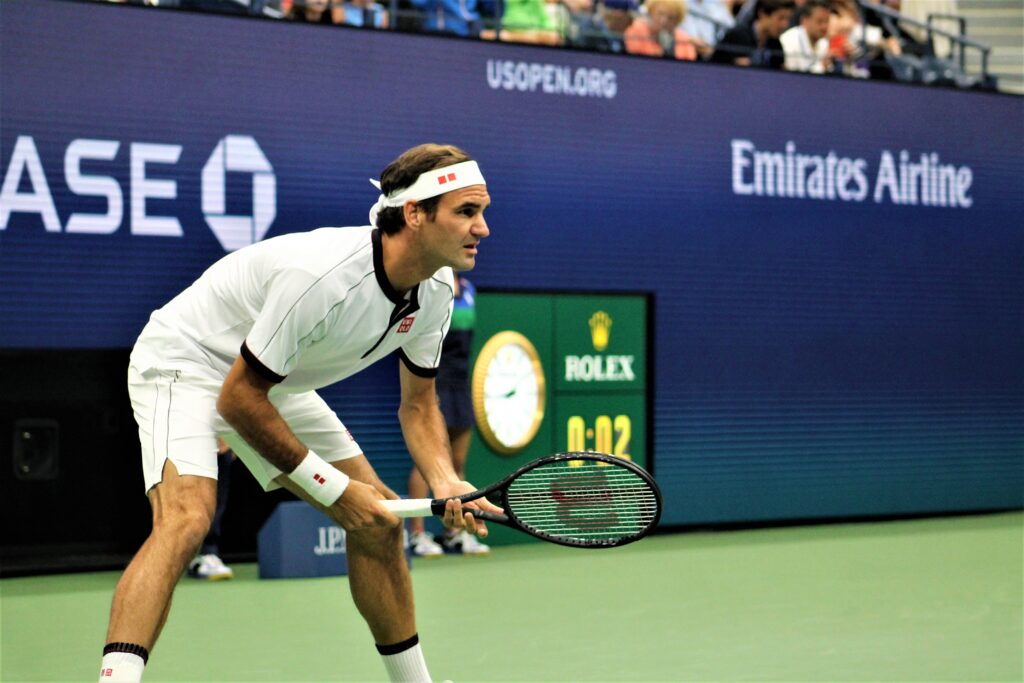
Like many of you, I was excited to learn that Roger Federer was giving a commencement speech. How fortunate for Dartmouth that Tony Godsick, his agent, had a daughter in the Dartmouth University 2024 graduating class, which is also Godsick’s alma mater.
Much like Federer’s career, the speech went viral. Some described it as motivational, full of humility, vulnerable and, yes, even a bit awkward. What was obvious was that Federer spent time on the speech and got to know the student’s favorite hangouts and activities. The speech had all the ingredients to draw an audience in and also relay very important points. He spoke about three big lessons; I believe these lessons are seminal for both an athlete and person to embrace in order to achieve maximum well-being and performance.
In the remainder of the article, I will share thoughts from my perspective as a holistic mental training coach regarding Federer’s poignant lessons and why they are so important and ultimately serve to set the stage for better performance.
- Effortlessness is a myth: Federer is known for being one of the most fluid, artistic, and graceful players ever to swing a racket. However, up-front and without remorse, he acknowledges that “I had to work hard to make it look easy… and this hard work was usually put in when no one was looking!”
Federer further stated, “I got there by trying to outwork my opponents, I believed in myself…belief has to be earned.”
His words clearly illustrate that he was focused on the process, not the outcome. He was focused on what it took to be successful. Federer then went on to share that “talent matters… talent has a broad definition, but most of the time, it’s not about having a gift, but about having grit…in tennis like in life, discipline is also a talent, so is patience, trusting yourself is a talent, embracing and loving the process is a talent, managing your life…these can be talents too…some are born with them, everyone has to work at them.”
What I love about this last statement is that Federer seems to recognize what I call the three talents of the Whole Human Athlete. Certainly, he recognizes physical talent, but he also clearly speaks to personal talents like patience, trust and sticking to the process. These talents are often overlooked by coaches, parents, and even the players themselves. Lastly, throughout his speech he makes reference to how his experiences, culture and upbringing have been so important to shaping who he is. So how can a junior player apply this lesson? It easy to say, harder to do, but put in the work, love the process, and be yourself.
- It’s only a point: This is a guy who has won 103 singles titles including 20 Grand Slams. However paradoxically, he said “while playing, the point has to be the most important thing in the world, but when it’s behind you, its behind you, this mindset is really crucial, because it frees you to fully commit to the next point …with intensity, clarity and focus.” He goes on to say, “the truth is, whatever game you play in life sometimes you’re going to lose…it’s a roller coaster with ups and down…but negative energy is wasted energy, you want to become a master at overcoming hard moments, to me that’s the sign of a champion.”
Federer mentioned how he won 80 percent of his matches but only 54 percent of the points. He said “the best in the world are not the best because they win every point, it’s because they know how to lose again and again and learned how to deal with it.” So how can a junior tennis player apply this lesson? As Federer says, become a master at accepting and working to overcome hard moments and adversity. I call this adversity management. This is the game within the game; it’s the game that you can control, not the outcome.
- Life is bigger than the court: This was Federer’s last key lesson. He shared that, “when I was first starting out, tennis could show me the world, but tennis could never be the world.” He further said, “Even when I was in the top 5, it was always important to have a life, a rewarding life full of travel, culture, friendship, and especially family, I never abandoned my roots and never forgot where I came from… but these were the reasons I never burned out maybe?”
Federer then went on to explain that he realized that he, “didn’t just want to travel the world as a tourist, I realized pretty early that I wanted to serve other people in other countries.” He elaborated that he started his foundation before he was ready, and that he wanted to use philanthropy where he could use more personal talents like his ideas, time and energy to a mission larger than himself.
The idea that Federer speaks about life being bigger than the court is similar to how Rafa says “tennis is what I do, not who I am.” While tennis is obviously important to Federer and Nadal, they speak to recognizing that tennis is not who they are. These perspectives illustrate awareness, balance and clarity as whole human athletes. So how can a junior tennis player, their coach and parents use the idea that life is larger than tennis? I suggest the importance of cultivating a balance in life, be it friends/family, hobbies, and serving others on and off the court.
In summary, Federer’s speech resonated with many people in many ways. He delivered his speech with humility, gratefulness, and appreciation to others that have helped and shared in his journey. His three lessons of: Effortlessness is a myth, it’s only a point, and life is bigger than the court speaks to not just tennis but also to life and the whole human athlete.
This perspective will be helpful off the court but on the court, it can take pressure off of the performance. It will be helpful to leverage not just your physical talents but also the personal talents and cultural experiences.